If you’ve been trading gold for a while, you’ve probably noticed something, regular gold ETFs move slowly and steadily, but sometimes you want more punch. That’s exactly why traders turn to a gold leveraged ETF , a fund built to amplify the daily price movement of gold, usually by 2x or 3x, so a 1% move in gold can turn into a 2-3% move in your position. It sounds exciting, but leveraged gold funds are also some of the most misunderstood products in the ETF world. This guide breaks down exactly how they work, the real risks involved, and how traders actually use them in practice.
Whether you’re looking at a 3x gold etf for aggressive short-term trades, or a short gold etf to hedge a portfolio, this article covers everything you need before you put real money on the line.
What Is a Gold Leveraged ETF?
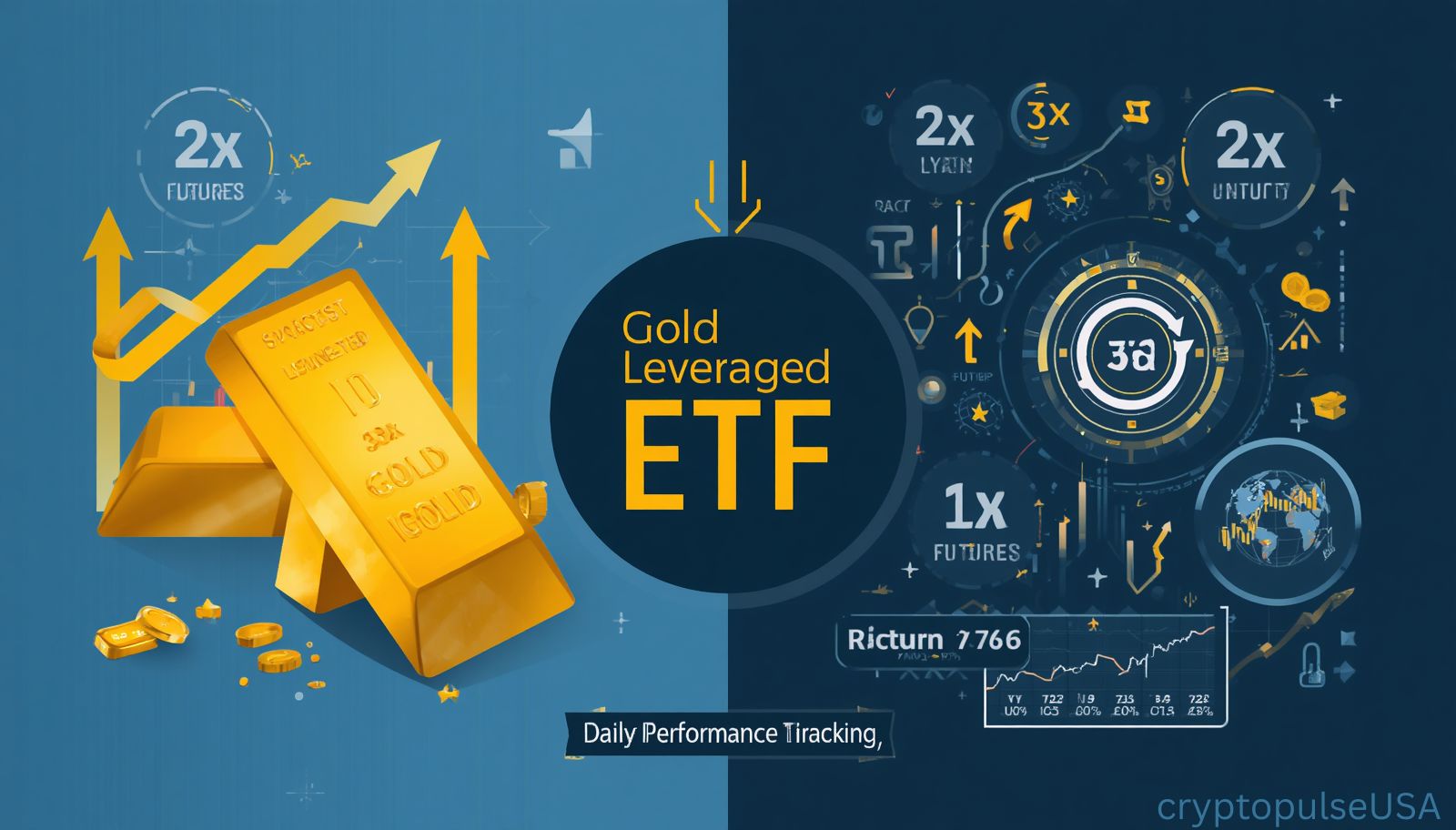
A gold leveraged ETF is an exchange-traded fund designed to deliver a multiple typically 2x or 3x of the daily performance of gold or a gold-related index (often gold futures contracts rather than physical bullion). Fund providers achieve this leverage using a mix of gold futures, swaps, and other derivatives rather than by simply buying more physical gold.
Here’s the key detail most beginners miss: leveraged ETFs are built to track daily performance, not long-term performance. This distinction matters enormously and is the single biggest reason traders lose money in these products without realizing why.
A Simple Example
Say gold rises 1% on a given day.
- A standard gold ETF gains roughly 1%.
- A 2x gold leveraged ETF gains roughly 2%.
- A gold leveraged etf 3x product gains roughly 3%.
Now flip it: if gold drops 1%, the 3x fund drops roughly 3%. The leverage cuts both ways, and it resets every single day.
How Daily Rebalancing Creates “Volatility Decay”
This is the part that catches new investors off guard. Because leveraged ETFs reset their exposure daily, returns over multiple days don’t simply multiply in a straight line they compound.
Imagine gold goes up 10% one day and then falls 10% the next day. Gold itself ends up down about 1% (10% gain, then a 10% loss on the higher base). But a 3x leveraged fund tracking that same move could end up down significantly more than 3%, purely because of how daily compounding works in a choppy, sideways market. This effect is often called “volatility decay” or “beta slippage.”
This is exactly why most professional traders treat leveraged gold ETFs as short-term tactical tools often held for a few hours to a few days rather than long-term investments. If you’re deciding whether gold exposure in general fits your portfolio for the long haul, that’s a separate conversation (one we cover in our article on whether a gold ETF is a good investment).
Inverse Gold ETF and Short Gold ETF:
Not every trader wants to bet that gold goes up. An inverse gold etf (sometimes just called a short gold etf) is designed to move in the opposite direction of gold prices. If gold falls 1%, an inverse fund gains roughly 1% (or 2-3% if it’s a leveraged inverse product).
Let’s say you’re holding physical gold, gold mining stocks, or a long gold ETF position, and you’re worried about a short-term pullback maybe the Fed just signaled a rate hike, which historically pressures gold prices. Rather than selling your core holdings and dealing with tax consequences or missing a rebound, some traders use a short-term inverse gold ETF as a hedge to offset potential losses over a specific event window, like an FOMC meeting or a jobs report.
Popular examples of inverse and leveraged gold products traders research include funds like ProShares UltraShort Gold (GLL), DB Gold Double Short ETN (DZZ), and leveraged long products like ProShares Ultra Gold (UGL) and DB Gold Double Long ETN (DGP). Always check a fund’s actual prospectus and current holdings before trading, since providers occasionally restructure or close products.
Why Traders Use 3x Gold ETFs
The appeal of a 3x gold ETF is simple: capital efficiency. Instead of tying up a large amount of capital to get meaningful exposure to a gold price move, a trader can allocate a smaller amount and still capture an amplified return if their thesis plays out quickly.
Suppose a trader believes gold is about to break out due to a weaker U.S. dollar and rising geopolitical tension (a classic gold catalyst). Instead of buying $30,000 of a standard gold ETF, they might put $10,000 into a 3x leveraged gold fund, aiming for similar directional exposure with less capital tied up while fully understanding that losses are also amplified 3x if the trade goes the other way.
This is why leveraged gold products are generally recommended for:
- Active, short-term traders who monitor positions daily
- Traders hedging a specific, time-bound event (a Fed meeting, an inflation print, geopolitical news)
- People who fully understand derivatives, margin-like risk, and daily compounding
They are generally not recommended for:
- Buy-and-hold retirement portfolios
- Anyone who can’t actively monitor the position
- Investors using leveraged funds as a “safer way to get more gold exposure” (leverage isn’t about safety it’s about magnitude)
Costs to Watch: Expense Ratios and Tracking Error
Leveraged and inverse ETFs typically carry higher expense ratios than standard gold ETFs often in the 0.75%-1.25% range compared to 0.17%-0.40% for a plain gold ETF. Over time, this cost eats into returns, especially if you’re holding longer than intended.
You’ll also want to watch tracking error the gap between the fund’s actual performance and its stated multiple of gold’s daily move. This can widen during periods of high volatility or when the fund is trading gold futures contracts that are rolling from one expiration month to the next.
Gold Leveraged ETF vs. Other Ways to Trade Gold
It helps to see leveraged gold ETFs next to the alternatives:
| Method | Leverage | Best For | Key Risk |
|---|---|---|---|
| Standard gold ETF | None | Long-term holding | Slow, steady moves only |
| Gold leveraged ETF (2x/3x) | 2x-3x | Short-term tactical trades | Volatility decay, high cost |
| Gold futures contract | Variable (margin-based) | Experienced traders, hedging | Margin calls, expiration rollover |
| Physical gold | None | Long-term store of value | Storage, liquidity, no yield |
If you’re still building your core gold allocation, it’s worth comparing this against a full list of leveraged ETFs across other asset classes, since the same daily-reset mechanics apply whether you’re trading gold, oil, or equity index leveraged funds.
Who Should Actually Consider a Gold Leveraged ETF?
Realistically, this product fits a narrow but real niche of traders:
- Short-term momentum traders reacting to a specific catalyst (CPI data, a Fed decision, a geopolitical shock).
- Portfolio hedgers using an inverse gold ETF for a few days to offset risk in a related position.
- Experienced derivatives traders who already understand options, futures, and margin, and see leveraged ETFs as another tool in that toolkit.
If none of those describe you, a standard gold ETF, gold mining stock, or physical gold allocation is almost always the more appropriate choice something worth exploring further if you’re weighing whether a gold ETF is a good investment for your goals in the first place.
A Quick Note on Global Access
Availability of specific leveraged gold products varies by country and brokerage. U.S. investors have the widest selection through providers like ProShares, Direxion, and GraniteShares, while investors in other markets — for example, those researching a gold ETF in India often have access to standard gold ETFs but more limited leveraged options due to local regulatory restrictions on retail leverage products. Always confirm what’s actually available and permitted through your local broker and regulator before trading.
It’s also worth noting that leveraged strategies aren’t unique to gold. Traders who like this style of tactical exposure often look at similar products tied to silver, or even leveraged funds tracking the U.S. dollar index, since currency strength and gold prices are historically inversely correlated.
Gold Leveraged ETF vs. Silver ETF
Gold isn’t the only precious metal traders apply this strategy to. Silver ETFs including their own leveraged and inverse versions follow the exact same daily-reset mechanics covered earlier in this guide, but silver tends to be even more volatile due to its heavy industrial demand from electronics, solar panels, and manufacturing. This added volatility can make leveraged silver products swing harder in both directions than their gold counterparts, so the same cautions around short-term use and volatility decay apply, arguably even more so.
If you’re weighing whether to add silver alongside gold in your portfolio, or want to understand how a standard silver ETF works before considering anything leveraged, our full guide on silver ETFs breaks down the best options, real fund examples, and how gold and silver exposure typically complement each other.
Key Risks
Before trading any gold leveraged ETF, keep these points front and center:
- Not designed for long-term holding: performance compounds daily, not linearly over weeks or months.
- Higher expense ratios than standard gold ETFs.
- Amplified losses, not just amplified gains, a 3x fund can lose 3x as fast as it gains.
- Tracking error can widen during volatile periods.
- Requires active monitoring: these aren’t “set and forget” positions.
Final Thoughts
A gold leveraged ETF can be a genuinely useful tool for the right trader in the right situation short-term momentum plays, event-driven hedges, or tactical portfolio adjustments. But it’s a precision instrument, not a everyday investment vehicle. Understand the daily-reset mechanics, respect the cost structure, and size your position knowing that both gains and losses arrive faster than you’re used to.
This article is for informational purposes only and isn’t financial advice. Leveraged and inverse ETFs carry significant risk and aren’t suitable for all investors consider speaking with a licensed financial advisor before trading these products.
FAQ
Is a gold leveraged ETF good for beginners?
Generally, no. These products are built for short-term, active trading and require a solid understanding of daily compounding and derivatives-based exposure. Beginners are usually better served starting with a standard gold ETF.
Can I hold a 3x gold ETF long-term?
You technically can, but due to volatility decay, your long-term returns can diverge significantly from 3x gold’s actual long-term performance sometimes dramatically so in choppy markets.
What’s the difference between an inverse gold ETF and a short gold ETF?
These terms are generally used interchangeably. Both refer to funds designed to rise in value when gold prices fall.
Do leveraged gold ETFs use physical gold?
Most use gold futures contracts, swaps, and other derivatives rather than holding physical bullion, which is part of why tracking error and rollover costs can occur.

Adiba Hanif is a crypto and business content creator and the founder of CryptoPulseUSA. She writes about cryptocurrency trends, blockchain technology, and online income strategies, making complex topics simple and accessible for modern investors.



Leave a Reply