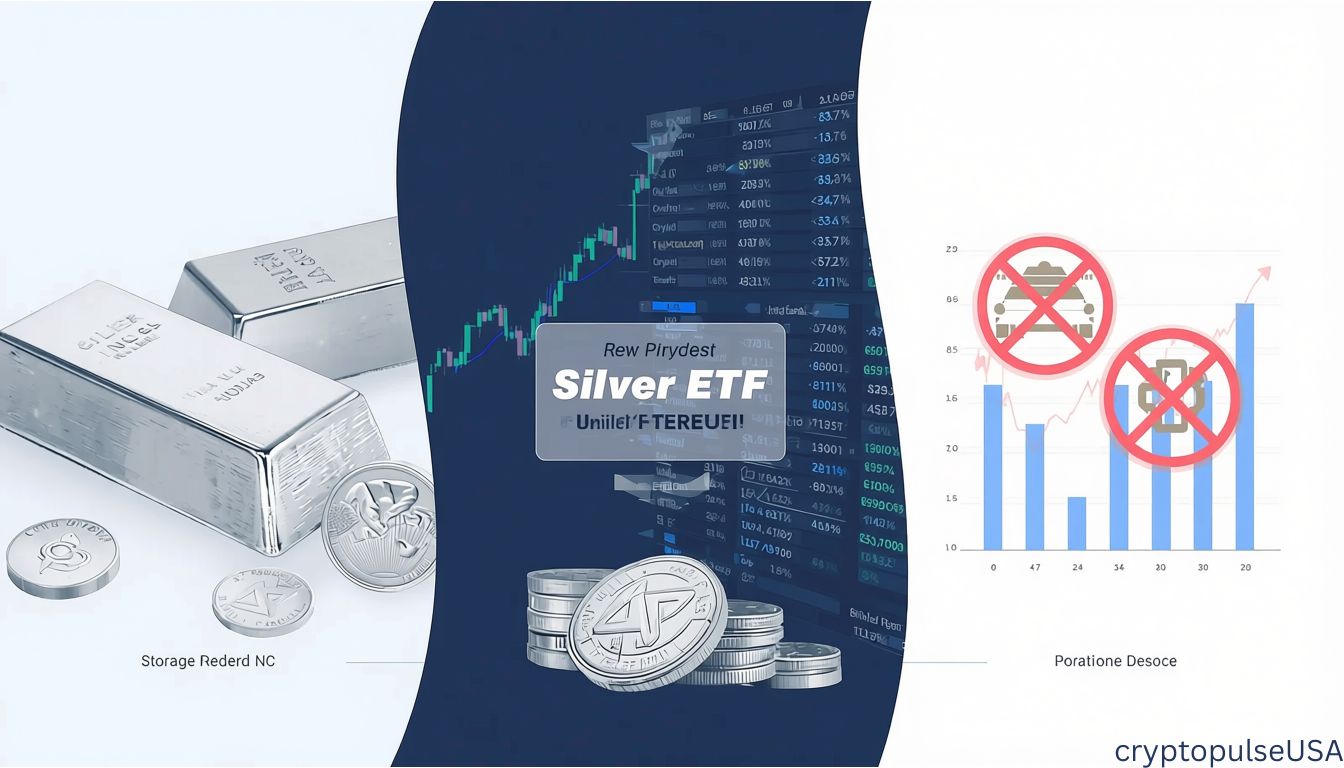
A silver etf gives you exposure to the price of silver without ever having to store a single bar or coin. Instead of dealing with dealer premiums, insurance, or a safe in your closet, you simply buy shares on a stock exchange, just like you would with any other stock. For most investors looking to add silver to a portfolio in 2026, this is by far the simplest entry point and it’s why silver ETFs have become one of the most popular ways to trade the metal.
In this guide, we’ll walk through how silver ETFs actually work, look at real examples, compare the best silver etf options available today, and cover use cases so you can decide if one fits your portfolio.
How a Silver ETF Works
Most silver ETFs fall into one of two categories:
- Physically-backed silver ETFs — the fund actually holds physical silver bullion in secure vaults, and each share represents a claim on a portion of that silver.
- Futures-based silver ETFs — the fund holds silver futures contracts instead of physical metal, which can introduce tracking differences due to contract rollovers.
For most everyday investors, a physically-backed fund is the simpler and more transparent option, since its price tracks the spot price of silver fairly closely without the added complexity of futures rollovers.
The iShares Silver Trust (SLV) is the largest and most widely traded silver ETF, holding physical silver bullion in vaults and giving investors a straightforward way to track silver’s spot price. Another well-known option, abrdn Physical Silver Shares (SIVR), works similarly but with a lower expense ratio, which appeals to long-term holders who want to minimize costs over time.
Best Silver ETF Options to Consider
When people search for the best silver etf to buy, they’re usually weighing a few factors: cost, liquidity, and whether they want plain silver exposure or something more specialized. Here’s how the main categories break down:
| Fund Type | Example | Best For | Key Consideration |
|---|---|---|---|
| Large, liquid physical silver ETF | iShares Silver Trust (SLV) | Most investors, day traders | Slightly higher expense ratio |
| Low-cost physical silver ETF | abrdn Physical Silver Shares (SIVR) | Long-term holders | Lower liquidity than SLV |
| Silver miners ETF | Global X Silver Miners ETF (SIL) | Investors wanting leveraged-style exposure to silver prices via mining companies | Mining stock risk, not pure silver price tracking |
| Small-cap silver miners | ETFMG Prime Junior Silver Miners ETF (SILJ) | Higher-risk, higher-reward plays | More volatile than large miners |
A full silver etf list typically includes both bullion-backed funds and mining-company funds, so it’s worth being clear on which type actually fits your goal. If you want silver’s price movement directly, stick with a physically-backed fund. If you’re comfortable with equity-style risk in exchange for potentially bigger swings, a miners ETF might interest you.
Gold and Silver ETF: Should You Hold Both?
A common question investors ask is whether to hold a gold and silver etf combination, or focus on just one metal. Here’s the practical reasoning many portfolio builders use:
- Gold tends to behave as a more stable store of value, often moving on macro factors like interest rates, inflation expectations, and the U.S. dollar.
- Silver is more volatile because it has significant industrial demand (electronics, solar panels, medical devices) in addition to its role as a precious metal. This means silver can rally harder during industrial booms but also fall harder during economic slowdowns.
Real-World Use Case
Consider an investor building a precious metals allocation who wants diversification within that sleeve of their portfolio. Rather than putting the entire allocation into gold, they might split it say, 70% into a standard gold ETF and 30% into a silver ETF to capture gold’s stability alongside silver’s higher growth potential during periods of strong industrial demand, like a renewable energy manufacturing boom. Some investors also look at combined precious metals funds that blend gold and silver exposure in a single ETF, which simplifies rebalancing but reduces control over the exact ratio.
If you’re deciding how much of your portfolio should go toward precious metals in general, it’s worth first reading through whether a gold ETF is a good investment for your specific goals, since the same core reasoning around inflation hedging and portfolio diversification applies to silver as well.
Silver ETF vs. Physical Silver
| Factor | Silver ETF | Physical Silver |
|---|---|---|
| Storage | None needed | Requires secure storage |
| Liquidity | Trades instantly on exchanges | Requires finding a buyer/dealer |
| Costs | Expense ratio (typically 0.20%-0.65%) | Dealer premiums, storage, insurance |
| Ownership | Indirect (fund shares) | Direct physical ownership |
| Best for | Traders, portfolio diversification | Long-term holders wanting direct possession |
Who Should Consider a Silver ETF?
Silver ETFs tend to make sense for:
- Portfolio diversifiers looking to add precious metals exposure alongside gold, without the hassle of physical storage.
- Traders who want to react quickly to silver price movements, since ETF shares trade instantly during market hours.
- Industrial demand investors who believe rising use of silver in solar panels and electronics will support long-term price growth.
They may be less ideal for investors who specifically want direct physical ownership of precious metals as a hedge against broader financial system risk, since an ETF share is ultimately a financial product rather than metal in your hand.
A Note on Leveraged Silver Exposure
Just like gold, silver also has leveraged and inverse ETF versions available for short-term traders who want amplified exposure to daily price swings. These work under the same daily-reset mechanics as leveraged gold funds, meaning they carry similar risks around volatility decay and are generally unsuitable for long-term holding. If you’re new to how that leverage mechanism works, it’s worth reviewing the fundamentals in our gold leveraged ETF guide before considering a leveraged silver product, since the underlying mechanics are identical.
Final Thoughts
A silver ETF offers a simple, liquid way to add precious metals exposure to your portfolio without the logistics of physical ownership. Whether you choose a large physically-backed fund, a lower-cost alternative, or a miners-focused ETF depends on whether you want direct price tracking or are comfortable with additional equity-style risk. As with gold, it’s worth thinking about silver as part of a broader precious metals strategy rather than a standalone bet.
FAQ
What is the best silver ETF for beginners?
A large, liquid, physically-backed fund like the iShares Silver Trust (SLV) is generally the simplest starting point, since it closely tracks silver’s spot price with high daily trading volume.
Is a silver ETF a good investment in 2026?
Silver ETFs can be a reasonable way to add diversification and inflation-hedging exposure to a portfolio, particularly given silver’s growing industrial demand. As with any investment, it depends on your goals, time horizon, and risk tolerance.
Do silver ETFs pay dividends?
Most physically-backed silver ETFs do not pay dividends, since they simply hold bullion rather than generating income. Silver mining ETFs may pay dividends if the underlying mining companies do.
What’s the difference between a silver ETF and a silver miners ETF?
A silver ETF (like SLV) tracks the price of physical silver directly. A silver miners ETF (like SIL) holds shares of companies that mine silver, so its performance is influenced by both silver prices and each company’s business performance.

Adiba Hanif is a crypto and business content creator and the founder of CryptoPulseUSA. She writes about cryptocurrency trends, blockchain technology, and online income strategies, making complex topics simple and accessible for modern investors.



Leave a Reply