
Technology continues to influence almost every part of the economy, from artificial intelligence and semiconductors to cloud computing, cybersecurity and software. For investors who want exposure to this sector without selecting individual technology stocks, tech ETFs can provide a convenient alternative. Instead of buying one company, an ETF can hold dozens or hundreds of companies inside a single investment. But not all technology ETFs are the same. Some focus on broad information technology, while others concentrate on semiconductors, artificial intelligence, software, cybersecurity or other themes.
This guide explains what tech ETFs are, how they work, the leading types to research in 2026, how to compare them, their risks, fees, performance metrics and how to choose one that fits your investment goals.
Technology ETFs are being influenced by AI infrastructure spending, semiconductor demand, valuations, interest rates, Treasury yields and corporate earnings. Recent trading has also shown how quickly technology and semiconductor funds can move when investors reassess AI growth expectations or interest-rate risks.
What Are Tech ETFs?
Tech ETFs, short for technology exchange-traded funds, are investment funds that hold a basket of technology-related stocks. An ETF trades on a stock exchange similarly to an individual stock. Instead of purchasing shares of one company, you purchase shares of the fund, giving you exposure to the securities held by that fund.
Depending on the ETF, the portfolio may include companies involved in:
- Semiconductors
- Software
- Cloud computing
- Technology hardware
- Cybersecurity
- IT services
- Artificial intelligence
- Networking
- Data centers
- Robotics and automation
Some funds specifically track the formal information technology sector, while others use broader or thematic definitions of technology. That distinction matters. For example, a traditional technology-sector ETF and an AI ETF can both be described as “tech ETFs,” but their portfolios and investment objectives can be very different.
Also Read: Industial Etfs
How Do Technology ETFs Work?
Most tech ETF funds follow an index or defined investment strategy.
The basic process is:
- An ETF provider creates a fund.
- The fund follows a particular index or strategy.
- The fund purchases a portfolio of securities.
- Investors buy and sell ETF shares on an exchange.
- The ETF’s market price changes throughout the trading day.
ETF investors should understand that the market price can differ from the fund’s net asset value (NAV). ETFs can trade at a premium or discount to NAV, and bid-ask spreads create an additional trading cost. The SEC recommends reviewing an ETF’s prospectus, NAV, premiums or discounts, holdings and bid-ask spread before investing.
Why Invest in Tech ETFs?
There are several reasons investors consider technology ETFs.
Diversification
A tech ETF can provide exposure to multiple companies through one purchase. Instead of researching dozens of individual stocks, an investor can purchase one fund containing a basket of technology companies. However, ETF does not automatically mean diversified. A fund can hold hundreds of stocks while still having significant exposure to a small number of mega-cap companies.
Exposure to Technology Growth
Technology is involved in major long-term trends such as:
- AI
- cloud computing
- semiconductors
- cybersecurity
- software
- data centers
- automation
- digital infrastructure
Simpler Portfolio Construction
A technology ETF can be easier to manage than selecting and monitoring individual technology stocks.
Potential for Long-Term Growth
Technology companies can benefit from productivity improvements, business digitization and innovation. But growth potential comes with risk. Technology stocks can experience substantial declines when valuations fall, earnings disappoint or interest rates rise.
Also Read: Multi-Metal ETFs
Types of Tech ETFs
One of the biggest mistakes investors make is treating every technology ETF as the same.
There are several categories.
Broad Technology ETFs
These funds provide relatively broad exposure to technology companies.
They can include:
- software
- hardware
- semiconductors
- IT services
- communications equipment
A broad technology ETF may be more suitable for someone seeking sector-wide exposure rather than betting on one particular technology trend.
Large-Cap Technology ETFs
These funds focus heavily on larger technology companies.
Their portfolios may have significant exposure to companies such as:
Large-cap exposure can provide access to established businesses, but it can also create concentration risk.
Semiconductor ETFs
Semiconductor ETFs focus on companies involved in:
- chip design
- manufacturing
- semiconductor equipment
- memory
- AI accelerators
- networking chips
Examples investors commonly research include SMH and SOXX. Semiconductor ETFs can be more volatile than broad technology ETFs because the semiconductor industry is cyclical and heavily influenced by capital spending, inventory levels, AI demand and supply-chain conditions. The semiconductor segment has been particularly important because AI infrastructure requires enormous amounts of computing capacity and advanced chips. At the same time, recent market volatility has demonstrated the risks of concentrating too heavily in the chip theme.
Software ETFs
Software-focused ETFs provide exposure to companies developing:
- enterprise software
- cloud software
- cybersecurity software
- business applications
- data-management platforms
These funds may behave differently from semiconductor ETFs because their revenue models and cost structures are different.
Artificial Intelligence ETFs
AI ETFs target companies expected to benefit from artificial intelligence. However, AI ETF does not have one standardized meaning. One AI fund may focus on semiconductor manufacturers, another on data-center infrastructure, and another on software companies. Therefore, don’t buy an AI ETF simply because its name contains “AI.”
Check:
- Index methodology
- Holdings
- Top-10 positions
- Sector exposure
- Expense ratio
- Rebalancing rules
This is particularly important as AI-related ETF products have expanded and investors are increasingly distinguishing between AI infrastructure, chips, software and other AI themes.
Cybersecurity ETFs
Cybersecurity ETFs focus on companies involved in protecting:
- networks
- cloud systems
- data
- applications
- corporate infrastructure
Cybersecurity spending can be influenced by increasing digital dependence, regulation and the growing sophistication of cyber threats.
Cloud Computing ETFs
These ETFs target companies involved in:
- cloud infrastructure
- cloud software
- data centers
- enterprise cloud services
Cloud computing can overlap substantially with AI because AI workloads require significant computing and data infrastructure.
Robotics and Automation ETFs
These funds generally target companies involved in:
- industrial automation
- robotics
- machine vision
- autonomous systems
- advanced manufacturing
They are more thematic than traditional technology-sector ETFs.
Best Tech ETFs to Consider in 2026
There is no single best tech ETF for every investor. Instead, compare funds according to their objective.
Some widely followed ETFs to research include:
| ETF | Primary Exposure | What to Examine |
|---|---|---|
| VGT | U.S. information technology | Broad sector exposure, concentration, fees |
| XLK | U.S. technology sector | Large-cap concentration and index methodology |
| QQQ | Nasdaq-100 | Technology-heavy but not a pure technology ETF |
| QQQM | Nasdaq-100 | Long-term Nasdaq-100 exposure and costs |
| SMH | Semiconductors | High semiconductor and AI exposure |
| SOXX | Semiconductors | Diversified semiconductor exposure |
| IXN | Global technology | International technology exposure |
| IGM | Expanded technology | Broader technology-related exposure |
These should be treated as examples to research, not universal recommendations.
VGT
Vanguard Information Technology ETF is a broad U.S. information-technology fund. As of July 31, 2026, Vanguard reported 319 stocks in the fund. Its largest reported holdings included NVIDIA, Apple and Microsoft, showing that even a broad technology ETF can have meaningful mega-cap concentration. (Vanguard Advisors)
XLK
XLK is designed to provide exposure to the technology sector of the S&P 500. Its large company orientation makes it different from a fund containing hundreds of smaller technology businesses.
QQQ and QQQM
QQQ and QQQM track the Nasdaq-100. They are often discussed alongside tech ETFs because of their substantial technology exposure. However, the Nasdaq-100 is not the same thing as the technology sector. This distinction is important when comparing QQQ with a pure technology-sector ETF.
SMH and SOXX
These are semiconductor-focused ETFs. They can provide more targeted exposure to the chip industry than a broad technology ETF. That can increase both potential upside and downside volatility.
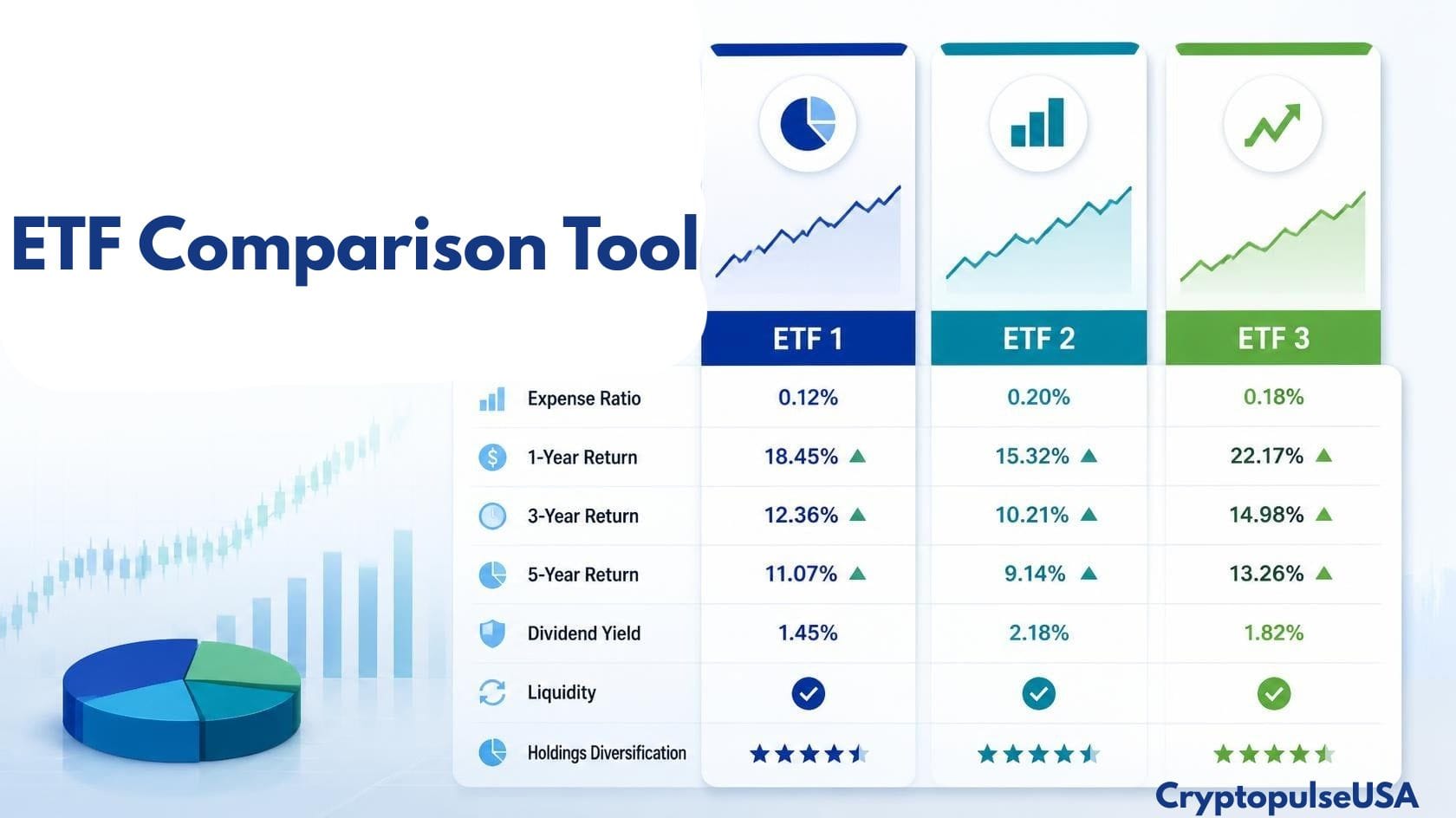
Tech ETF Comparison: What Should You Look At?
Don’t select a fund based only on its recent return.
Use a broader framework.
1. Investment Objective
First ask:
What do you actually want from the ETF?
For example:
- broad technology exposure
- semiconductor exposure
- AI exposure
- international exposure
- income
- growth
- diversification
2. Index Methodology
Read how the ETF selects and weights companies.
Look for:
- market-cap weighting
- equal weighting
- modified weighting
- thematic selection
- sector classification
- rebalancing schedule
Two funds can both call themselves technology ETFs while following completely different methodologies.
3. ETF Holdings
Check:
- total number of holdings
- top 10 holdings
- individual company weights
- industry allocation
- geographic exposure
This is one of the most important steps.
For example, VGT’s july 2026 portfolio data showed NVIDIA at 16.77%, Apple at 15.25% and Microsoft at 9.87%. Together, those three positions represented a substantial portion of the fund. That illustrates why number of holdings alone isn’t enough to measure diversification.
Tech ETF Concentration Risk
A fund can contain hundreds of stocks and still be concentrated Suppose an ETF has 300 holdings, but its largest 10 companies account for a large portion of assets. The performance of those companies can heavily influence the entire ETF.
Look at:
- Top-5 concentration
- Top-10 concentration
- largest individual position
- semiconductor exposure
- mega-cap exposure
This is especially important, because AI-related technology spending has increased the importance of companies involved in chips, computing infrastructure and data centers.
Tech ETF Performance: What Should You Measure?
Avoid choosing the best-performing tech ETF solely by looking at its 1-year return.
Consider:
- 1-year return
- 3-year annualized return
- 5-year annualized return
- 10-year annualized return
- YTD return
- total return
- volatility
- maximum drawdown
- tracking difference
- expense ratio
- dividend yield
Why Maximum Drawdown Matters
Two ETFs can have similar long-term returns but dramatically different declines during market selloffs. A lower maximum drawdown may be important for investors who cannot tolerate large temporary losses.
Why Tracking Difference Matters
An ETF designed to track an index won’t necessarily produce exactly the same return as that index. Fees, portfolio implementation, trading costs and other factors can contribute to differences.
Tech ETFs and Artificial Intelligence
AI is one of the biggest forces affecting technology ETFs . The AI investment chain extends far beyond AI software.
It includes:
AI applications → cloud computing → data centers → networking → memory → semiconductors → semiconductor equipment → electricity infrastructure
This means a broad technology ETF may indirectly capture several parts of the AI ecosystem. But AI exposure also creates risks.
AI Valuation Risk
Investors may pay high valuations for companies expected to benefit from AI. If earnings growth fails to meet those expectations, stock prices can fall even when the underlying business continues to grow.
AI Monetization Risk
AI spending is large, but investors still need to evaluate whether companies can turn that spending into sustainable revenue and profits.
AI Infrastructure Risk
The AI buildout requires enormous capital expenditure.
Investors should watch:
- hyperscaler spending
- data-center construction
- semiconductor demand
- networking demand
- energy requirements
- financing conditions
Current 2026 market reporting shows investors are paying close attention to whether AI-driven growth can justify high valuations and the financing required for infrastructure expansion.
Tech ETFs vs Semiconductor ETFs
These investments are related but not identical.
| Feature | Tech ETF | Semiconductor ETF |
|---|---|---|
| Exposure | Broad technology | Chips and semiconductor industry |
| Diversification | Usually broader | Usually narrower |
| AI exposure | Can be significant | Often very significant |
| Cyclicality | Varies | Usually higher |
| Concentration | Depends on fund | Can be high |
| Risk | Sector-dependent | Often more volatile |
If you want broad technology exposure, a semiconductor ETF may be too concentrated. If you specifically want exposure to the chip industry, a broad technology ETF may not provide enough targeted exposure.
Tech ETFs vs Nasdaq-100 ETFs
This is another common source of confusion. Technology ETF: generally targets the technology sector or technology companies. Nasdaq-100 ETF: tracks the Nasdaq-100, which contains many technology and technology-related companies but is not a pure technology-sector index.
Therefore, don’t assume: Nasdaq-100 ETF = technology ETF. There can be significant overlap, but the investment objectives differ.
Tech ETFs vs Individual Tech Stocks
| Feature | Tech ETF | Individual Tech Stock |
|---|---|---|
| Diversification | Generally higher | Lower |
| Company-specific risk | Lower | Higher |
| Research required | Moderate | Higher |
| Potential return | Sector/fund dependent | Company dependent |
| Risk | Depends on fund | Can be very high |
| Convenience | High | Lower |
An ETF can reduce company-specific risk, but it cannot eliminate technology-sector risk.
Are Tech ETFs a Good Investment?
They can be useful for investors seeking long-term exposure to technology, but whether one is appropriate depends on your portfolio and objectives.
Potential Advantages
- diversification
- technology exposure
- convenience
- liquidity
- transparent holdings
- access to multiple companies
- potentially low operating costs
Potential Disadvantages
- sector concentration
- high valuations
- volatility
- interest-rate sensitivity
- mega-cap concentration
- AI expectations
- semiconductor cycles
- regulatory risk
- geopolitical risk
The right question isn’t simply: “Are tech ETFs good?”
A better question is: Does this particular technology ETF fit my risk tolerance, investment horizon and existing portfolio?
Are Tech ETFs Safe?
No investment is completely safe. Technology ETFs can decline substantially during market corrections.
Important risks include:
- market risk
- technology-sector risk
- concentration risk
- valuation risk
- interest-rate risk
- semiconductor cyclicality
- AI expectations risk
- geopolitical risk
- regulatory risk
- currency risk for international funds
- liquidity risk
- tracking difference
ETF structure can provide diversification, but it does not protect investors from falling stock prices.
Do Tech ETFs Pay Dividends?
Some technology ETFs pay dividends, but dividend income isn’t usually the main reason investors choose growth-oriented technology funds.
Dividend yield can vary depending on:
- portfolio holdings
- company dividend policies
- fund methodology
- distributions
- market prices
If income is your priority, compare technology ETFs specifically for:
- dividend yield
- distribution frequency
- dividend growth
- underlying holdings
Don’t choose an ETF based only on its headline yield.
How to Buy a Dollar ETF
Buying a dollar ETF is generally similar to buying a stock or other exchange-traded fund. The main difference is that you should understand how the ETF obtains its dollar exposure before placing an order. Dollar ETFs may use currency indexes, futures, swaps, or other instruments, so the fund’s structure can affect both its performance and risks.
Step 1: Choose a Brokerage
Open or use a brokerage account that provides access to the exchange where your chosen dollar ETF trades.
Before investing, check:
- ETF availability
- Trading commissions and other fees
- Account requirements
- Access to U.S. exchanges
- Research and fund information
- Tax-reporting features
For U.S.-listed dollar ETFs, make sure you are purchasing the correct fund and ticker symbol.
Step 2: Choose the Right Dollar ETF
Don’t start by buying the first ETF that appears in a search. First determine what you want the fund to accomplish.
For example:
- Bullish dollar exposure — if you expect the U.S. dollar to strengthen
- Bearish dollar exposure — if you expect the dollar to weaken
- Broad currency exposure — if you want exposure to the dollar against a wider currency basket
- Individual currency exposure — if you have a specific view on a currency such as the euro or yen
- Currency hedging — if your goal is to reduce foreign-exchange exposure in an international investment
The benchmark matters because two ETFs can both be described as “dollar ETFs” while following very different strategies.
Step 3: Research the Fund
Before placing an order, review the ETF’s key characteristics.
Check:
- Ticker symbol
- Investment objective
- Benchmark
- Fund strategy
- Expense ratio
- Assets under management
- Holdings or underlying instruments
- Derivatives exposure
- Historical tracking difference
- Distribution policy
- Risk disclosures
Pay particular attention to whether the fund uses futures, swaps, forwards, or other derivatives to obtain currency exposure.
Step 4: Read the Latest Fund Documents
Review the fund sponsor’s most recent documents before investing.
Important documents include:
- Summary prospectus
- Full prospectus
- Fact sheet
- Statement of additional information, when applicable
- Latest holdings
- Annual and semiannual reports
- Performance information
These documents can provide information that may not be obvious from an ETF comparison website.
Step 5: Check Liquidity and Trading Costs
A dollar ETF’s expense ratio is only one part of its cost. Also consider its liquidity and bid-ask spread.
Check:
- Average trading volume
- Bid price
- Ask price
- Bid-ask spread
- Assets under management
- Typical trading activity
A narrow bid-ask spread can reduce the implicit cost of entering or exiting a position. Don’t assume that a low share price means an ETF is inexpensive to trade.
Step 6: Compare the ETF With Its Benchmark
Before buying, look at how closely the ETF has historically followed its underlying benchmark.
For example, if a fund is designed to provide exposure to a dollar index, compare:
- ETF total return
- Benchmark return
- Tracking difference
- Expense ratio
- Effects of futures or other derivatives
This can help you understand whether the ETF is delivering the exposure you expect.
Step 7: Decide on an Order Type
Once you’ve selected the fund, you need to decide how to place the trade. A market order generally executes at the best available price in the market, but the final execution price is not guaranteed. This can be particularly important during periods of high volatility or when an ETF has a wider bid-ask spread.
A limit order allows you to specify the maximum price you are willing to pay when buying or the minimum price you are willing to accept when selling. However, a limit order may not execute if the market does not reach your specified price. For many investors, understanding the difference between these order types is more important than simply choosing whichever order appears first in the brokerage app.
Step 8: Review the Order Before Submitting
Before placing the trade, verify:
- ETF name
- Ticker symbol
- Buy or sell direction
- Number of shares
- Order type
- Limit price, if applicable
- Time-in-force setting
- Estimated transaction value
This simple check can help prevent accidental orders in the wrong ETF or at the wrong price.
Step 9: Monitor the Position
After purchasing the dollar ETF, don’t evaluate it solely by looking at its share price.
Monitor the factors that actually drive the fund’s performance, including:
- U.S. dollar strength
- Interest-rate expectations
- Federal Reserve policy
- The ETF’s underlying benchmark
- Currency movements
- Derivatives performance
- Tracking difference
- Fund expenses
- Liquidity
A dollar ETF can decline even when the broader U.S. economy appears strong if the fund’s underlying currencies or benchmark move against the strategy.
Step 10: Review Your Investment Periodically
Dollar ETFs are often used for tactical currency exposure, so periodically reassess whether the original investment thesis still applies.
Consider whether:
- Your outlook for the dollar has changed
- Interest-rate expectations have changed
- The ETF still matches your objective
- A cheaper or more liquid alternative is available
- The fund’s strategy or benchmark has changed
- The position has become too large within your portfolio
Important: Buying an ETF is relatively straightforward, but choosing the appropriate dollar ETF requires understanding its benchmark, structure, costs, liquidity, and risks. Always review the fund’s latest official documents before investing. This information is for educational purposes and is not personalized investment advice.
Tech ETF Portfolio Overlap
One of the most overlooked issues is ETF overlap.
An investor might own:
- a broad tech ETF
- QQQ
- an AI ETF
- a semiconductor ETF
and assume they have four different exposures. But the funds may all own some of the same major companies.
Before adding another ETF, compare:
- top holdings
- company weights
- sector exposure
- industry exposure
If several funds are heavily invested in the same companies, your portfolio may be much more concentrated than it appears.
Market-Cap Weighted vs Equal-Weighted Tech ETFs
Market-Cap Weighted
Larger companies receive larger portfolio weights.
Advantages:
- reflects company size
- straightforward
- often lower turnover
Disadvantage:
- can become heavily concentrated in mega-cap stocks.
Equal-Weighted
Companies receive more similar weights.
Advantages:
- potentially greater diversification across holdings
- less dependence on the largest companies
Disadvantages:
- more rebalancing
- different performance characteristics
- may underweight the biggest technology companies
Neither approach is automatically better.
How to Choose the Best Tech ETF
There is no single best tech ETF for every investor. The right fund depends on your investment goal, risk tolerance, time horizon, preferred technology theme, and how the ETF fits with the rest of your portfolio.
Use the following checklist before investing.
Define Your Investment Goal
First decide what type of technology exposure you actually want.
Do you want:
- Broad technology-sector exposure?
- AI and artificial intelligence?
- Semiconductors and chipmakers?
- Cybersecurity?
- Cloud computing?
- Robotics and automation?
- Software?
- Fintech?
- International technology companies?
- Technology-focused income?
A broad technology ETF and a semiconductor ETF can have very different risk and return characteristics, even though both fall under the technology theme.
Understand the ETF’s Index or Investment Methodology
Don’t choose a tech ETF based only on its name.
Read the fund’s index methodology or investment strategy to understand:
- Which companies qualify for inclusion
- How companies are weighted
- How often the index is rebalanced
- How often the portfolio is reconstituted
- Whether there are market-cap limits
- Whether individual holdings have maximum weight limits
- Which countries and industries are eligible
This can reveal important differences between ETFs that appear to offer similar exposure.
Examine the Holdings
Review the ETF’s current holdings and identify its largest positions.
Pay attention to:
- Top 10 holdings
- Individual company weights
- Number of holdings
- Sector allocation
- Geographic exposure
- Cash or other assets
- Small-, mid-, and large-cap exposure
A fund with 100 holdings may still be heavily influenced by a handful of mega-cap technology companies.
Measure Portfolio Concentration
Concentration is one of the most important factors when comparing tech ETFs.
Look at the percentage invested in:
- Top 5 holdings
- Top 10 holdings
- Largest individual position
For example, an ETF with 40% of its assets in its five largest companies has a very different risk profile from an ETF that spreads its assets more evenly. Higher concentration can increase the impact of a single company’s earnings, valuation changes, regulatory developments, or product news on the overall ETF.
Compare Expense Ratios
Compare the ETF’s expense ratio, but don’t automatically choose the fund with the lowest fee.
Also consider:
- Tracking difference
- Trading costs
- Bid-ask spread
- Fund liquidity
- Portfolio structure
- Index methodology
- Tax considerations
A slightly more expensive ETF can potentially be more attractive if it provides better exposure, stronger tracking, or lower trading costs.
Check Liquidity
Before investing, examine how easily the ETF can typically be bought and sold.
Review:
- Average trading volume
- Bid-ask spread
- Assets under management
- Average daily dollar volume
The bid-ask spread is particularly important because it represents an implicit trading cost. Don’t judge liquidity solely by trading volume. A fund with substantial assets and consistently narrow spreads may be easier to trade than another ETF with occasional bursts of high volume.
Study Long-Term Performance
Don’t choose a tech ETF solely because it had the highest return over the previous year.
Compare:
- 1-year return
- 3-year annualized return
- 5-year annualized return
- 10-year annualized return, when available
- Total return
- Benchmark performance
- Performance during market downturns
Past performance does not guarantee future results, particularly in technology, where valuations and investor expectations can change quickly.
Examine Risk and Volatility
Technology ETFs can experience substantial price swings.
Look at:
- Volatility
- Maximum drawdown
- Beta
- Concentration risk
- Sector exposure
- Geographic risk
- Valuation risk
- Interest-rate sensitivity
The maximum drawdown can be particularly useful because it shows how far an investment historically fell from a previous peak before recovering.
Check ETF Overlap
If you already own several ETFs, check whether your new tech ETF significantly overlaps with them.
For example, you might own:
- A broad S&P 500 ETF
- A Nasdaq-focused ETF
- A technology-sector ETF
- A semiconductor ETF
Buying all four does not necessarily provide four completely different sources of exposure. The same large technology companies may appear among the largest holdings in multiple funds. Look at overlapping holdings and portfolio weights, not just the number of ETFs you own.
Evaluate Valuation
A technology ETF can have strong companies in its portfolio while still being expensive relative to historical valuations.
Depending on the ETF’s strategy, consider metrics such as:
- Price-to-earnings ratio
- Forward P/E
- Price-to-sales ratio
- Earnings-growth expectations
- Free-cash-flow characteristics
Valuation should not be used in isolation, but it can help explain why two technology ETFs with similar holdings may carry different expectations.
Understand the Technology Theme
Some tech ETFs are broad sector funds, while others are highly specialized.
Before investing, determine whether the fund is primarily exposed to:
- AI
- Semiconductors
- Cloud computing
- Cybersecurity
- Software
- Robotics
- Internet companies
- Digital payments
- Hardware
- Emerging technologies
A thematic ETF can provide targeted exposure but may also carry greater concentration and theme-specific risk.
Check the ETF’s Rebalancing Rules
Find out how frequently the ETF’s underlying index is rebalanced.
Rebalancing rules can affect:
- Company weights
- Sector exposure
- Turnover
- Concentration
- Tracking performance
Two ETFs that track similar technology themes can produce different results because their indexes use different rebalancing and weighting methodologies.
Review Tax Considerations
If you’re investing through a taxable account, consider the ETF’s distribution history and tax characteristics.
Review:
- Dividend distributions
- Capital-gain distributions
- Portfolio turnover
- Account type
- Your individual tax situation
Tax treatment can vary depending on the investor and the ETF structure, so consult current fund tax documents and a qualified tax professional when appropriate.
Read the Prospectus
Before investing, read the ETF’s summary prospectus and, when necessary, the full prospectus.
Pay particular attention to:
- Investment objective
- Principal investment strategies
- Principal risks
- Fees and expenses
- Index methodology
- Portfolio turnover
- Historical performance
- Fund-specific risks
The SEC’s investor guidance emphasizes reviewing an ETF’s prospectus because it provides important information about the fund’s objectives, strategies, risks, costs, and performance.
Compare the ETF With Alternatives
Finally, compare your preferred tech ETF with at least two or three alternatives. This approach is generally more useful than relying on a generic list of the “best tech ETFs.”
Bottom line: The best tech ETF is not necessarily the one with the highest recent return or lowest expense ratio. Focus on the fund’s objective, index methodology, holdings, concentration, fees, liquidity, performance, risk, valuation, and overlap with your existing investments. Always review the latest official fund documents before investing.
How to Buy Tech ETFs
Buying a technology ETF is generally similar to buying a stock or other exchange-traded fund. However, because technology ETFs can range from broad sector funds to highly concentrated AI or semiconductor funds, researching the fund before placing an order is important.
Step 1: Open a Brokerage Account
Choose a regulated brokerage that provides access to the exchange where your selected ETF trades.
Before investing, check:
- ETF availability
- Trading fees and commissions
- Access to U.S. exchanges, if applicable
- Research tools
- Account requirements
- Tax-reporting features
Step 2: Choose the Right Tech ETF
First determine what type of technology exposure you want.
You may be looking for:
- Broad technology exposure
- AI
- Semiconductors
- Cybersecurity
- Cloud computing
- Robotics
- Software
- Fintech
- International technology
Two ETFs can both be labeled “tech ETFs” while having very different holdings, benchmarks, concentration levels, and risks.
Step 3: Research the ETF
Before buying, review the fund’s latest information and compare:
- Ticker symbol
- Investment objective
- Benchmark or index
- Top holdings
- Number of holdings
- Expense ratio
- Assets under management (AUM)
- Trading volume
- Bid-ask spread
- Portfolio concentration
- Historical performance
- Maximum drawdown
- Risk disclosures
Also check whether the ETF is market-cap weighted, equal weighted, or rules-based, as the weighting methodology can significantly affect performance.
Step 4: Check for Portfolio Overlap
If you already own ETFs or individual technology stocks, check whether the new ETF substantially overlaps with your existing investments. For example, a broad-market ETF may already have significant exposure to large technology companies. Adding another technology ETF could increase your exposure to the same companies more than you realize.
Step 5: Decide How Much to Invest
Determine the position size based on your overall portfolio, investment horizon, risk tolerance, and financial goals. Avoid deciding how much to invest solely because an ETF recently produced strong returns. Technology ETFs can experience significant declines during periods of market stress, changing interest-rate expectations, weak earnings, or technology-sector corrections.
Step 6: Choose an Order Type
Common order types include:
- Market order — generally executes at the best available market price, but the exact execution price is not guaranteed.
- Limit order — allows you to specify the maximum price you are willing to pay when buying or the minimum price you will accept when selling.
For less-liquid ETFs, pay particular attention to the bid-ask spread. A wider spread can increase the effective cost of entering or exiting a position.
Step 7: Review the Trade Before Submitting
Before placing the order, confirm:
- ETF name
- Ticker symbol
- Buy or sell direction
- Number of shares
- Order type
- Limit price, if applicable
- Estimated transaction value
- Time-in-force setting
This final check can help prevent mistakes, especially when several ETFs have similar names or investment themes.
Step 8: Monitor the Investment
You generally don’t need to react to every daily price movement.
Instead, periodically review:
- Fund performance
- Benchmark performance
- Expense ratio
- Portfolio holdings
- Concentration
- ETF overlap
- Investment thesis
- Changes in the technology sector
If the ETF is part of a long-term strategy, evaluate it against your original investment objective rather than short-term market noise.
Tech ETF Investment Strategies
Different investors can use technology ETFs in different ways. No single strategy is appropriate for everyone.
Buy and Hold
A long-term investor may purchase a diversified technology ETF and hold it for several years. The advantage is simplicity and reduced reliance on short-term market timing. However, buy-and-hold does not eliminate the risk of substantial losses. Technology sectors can experience long periods of volatility or underperformance.
Dollar-Cost Averaging
Dollar-cost averaging (DCA) involves investing a predetermined amount at regular intervals rather than investing the entire amount at once For example, an investor might invest the same amount every month regardless of whether technology stocks are rising or falling.
Potential advantages include:
- Creating a consistent investing habit
- Reducing reliance on market timing
- Buying more shares when prices are lower
- Spreading purchases over time
Dollar-cost averaging does not guarantee profits, eliminate losses, or guarantee better returns than investing a lump sum.
Core-and-Satellite Strategy
A core-and-satellite approach combines broad diversification with targeted investments.
For example:
- Core: A broad-market or diversified ETF
- Satellite: Smaller positions in technology, AI, semiconductor, or cybersecurity ETFs
This approach can provide targeted technology exposure without making a specialized technology theme the entire portfolio. The appropriate allocation depends on an investor’s circumstances and risk tolerance.
Thematic Investing
Thematic investors focus on specific long-term technology trends rather than the entire technology sector.
Common themes include:
- Artificial intelligence
- Semiconductors
- Cybersecurity
- Robotics
- Cloud computing
- Digital payments
- Automation
Thematic ETFs can provide concentrated exposure to a particular trend, but that concentration can also increase volatility and theme-specific risk. A popular technology theme can also become expensive if investors price in extremely optimistic future growth.
What Could Drive Tech ETFs in 2026?
Technology ETFs can be influenced by several interconnected factors. Investors should avoid focusing on a single headline because technology valuations are affected by both company fundamentals and broader economic conditions.
1. Artificial Intelligence Spending
Artificial intelligence remains one of the major drivers of technology investment in 2026.
AI-related spending can affect multiple parts of the technology ecosystem, including:
- GPUs and other accelerators
- Semiconductor manufacturing
- Data centers
- Networking equipment
- Cloud computing
- Software
- Power and infrastructure supporting data centers
The key question for investors is increasingly whether AI-related capital spending can translate into sustainable revenue, earnings, and free cash flow Strong AI demand can benefit technology ETFs with significant exposure to semiconductor and infrastructure companies, while disappointing AI monetization could create pressure on valuations.
2. Semiconductor Demand
Semiconductors remain critical to AI, smartphones, cloud computing, automobiles, industrial technology, and other technology markets.
Tech ETFs with substantial semiconductor exposure can react to:
- Chip demand
- Inventory levels
- Semiconductor pricing
- Foundry capacity
- Capital expenditure
- AI accelerator demand
- Export restrictions
- Supply-chain disruptions
Because semiconductor companies operate in a cyclical industry, strong demand can sometimes be followed by periods of excess capacity or weaker pricing.
3. Interest Rates and Federal Reserve Policy
Interest rates are particularly important for technology stocks because many technology companies are valued partly on expectations of future earnings growth. When interest-rate expectations rise, the present value assigned to future cash flows can decline, potentially putting pressure on growth-stock valuations. Conversely, falling-rate expectations can support valuations if other conditions remain favorable. The relationship is not mechanical, however. Strong earnings growth can sometimes outweigh the effect of changing interest rates.
4. Treasury Yields
U.S. Treasury yields are another important market variable.
Higher long-term yields can increase the discount rate used by investors when valuing future corporate cash flows. This can create pressure on companies whose valuations depend heavily on expected future growth. Technology ETFs can therefore react to major changes in Treasury yields even when there has been no major change in the underlying companies’ operations.
5. Corporate Earnings
Long-term technology ETF performance ultimately depends on the financial performance of the companies held by the fund.
Investors should monitor:
- Revenue growth
- Earnings growth
- Profit margins
- Free cash flow
- Capital expenditure
- Guidance
- Valuations
Strong stock-price performance without corresponding earnings growth can increase valuation risk.
6. AI Monetization
AI investment is not only about how much companies spend on AI infrastructure. Investors are also watching whether businesses can generate meaningful economic returns from that spending.
Important questions include:
- Are AI products generating new revenue?
- Are margins improving?
- Are customers increasing AI spending?
- Can companies maintain pricing power?
- Is AI reducing operating costs?
- How quickly are businesses adopting AI?
This distinction between AI spending and AI monetization is an important consideration when evaluating technology ETFs in 2026.
7. Regulation and Antitrust Policy
Technology companies operate in an increasingly complex regulatory environment.
Potential areas of regulatory impact include:
- Artificial intelligence
- Data privacy
- Antitrust
- Digital advertising
- Cybersecurity
- Consumer protection
- Semiconductor exports
- Competition policy
Regulatory changes can affect individual companies differently, so concentrated technology ETFs may be more exposed to company-specific regulatory developments.
8. Geopolitical and Supply-Chain Risks
Advanced technology depends on complex international supply chains.
Semiconductors and related technologies can be affected by:
- Trade restrictions
- Export controls
- Tariffs
- Geopolitical tensions
- Manufacturing disruptions
- Supply shortages
- Regional concentration of production
These risks can be particularly important for semiconductor-focused ETFs.
9. Technology Valuations
Even excellent technology companies can become risky investments when their valuations become disconnected from realistic earnings expectations.
In addition to earnings growth, investors should consider:
- Forward P/E
- Price-to-sales ratio
- Free-cash-flow yield
- Earnings expectations
- Revenue growth
- Valuation relative to historical levels
A technology ETF with rapidly growing companies can still experience a significant correction if investors lower the valuations they are willing to pay for future growth.
10. Market Concentration
The performance of broad technology indexes can increasingly be influenced by a relatively small number of mega-cap companies. This means investors should check the ETF’s top-10 concentration rather than assuming that a fund with many holdings is automatically diversified. A technology ETF can contain dozens or hundreds of companies while still deriving a large portion of its performance from a few dominant businesses.
Tech ETF Outlook for 2026: Three Scenarios
No one can know exactly how technology ETFs will perform.
Instead, investors can consider scenarios.
Bullish Scenario
Tech ETFs could benefit from:
- strong AI investment
- growing semiconductor demand
- strong corporate earnings
- successful AI monetization
- improving interest-rate conditions
- continued cloud growth
Neutral Scenario
Performance could remain mixed if:
- earnings remain strong but valuations are high
- AI spending continues but growth slows
- interest rates remain restrictive
- investors rotate between technology subsectors
Bearish Scenario
Technology ETFs could face pressure if:
- AI expectations fall sharply
- earnings disappoint
- interest rates remain high
- Treasury yields rise
- semiconductor demand weakens
- valuations contract
- geopolitical tensions disrupt supply chains
Recent market volatility around AI stocks and semiconductor funds shows why investors should avoid treating the 2026 technology outlook as a guaranteed one way trade.
Common Mistakes When Investing in Tech ETFs
Chasing the Highest Recent Return
Past performance doesn’t guarantee future results.
Ignoring Concentration
A fund with hundreds of holdings can still be dominated by a handful of companies.
Confusing QQQ With a Pure Tech ETF
QQQ is technology-heavy but follows the Nasdaq-100 rather than a pure technology-sector index.
Buying Too Many Similar ETFs
Overlapping funds may increase concentration rather than diversification.
Ignoring Fees
Small cost differences can compound over time. (Investor)
Focusing Only on Expense Ratio
Trading costs, spreads and tracking differences also matter.
Chasing AI
AI-related companies can have strong growth prospects but can also have high expectations and valuations.
Ignoring Your Existing Portfolio
A technology ETF may add less diversification than expected if you already own many technology stocks.
Tech ETF Tax Considerations
For U.S. investors, potential tax considerations include:
- capital gains
- dividend distributions
- holding periods
- taxable brokerage accounts
- tax-advantaged accounts
- capital losses
ETF tax treatment depends on the investor’s circumstances and the specific fund. Some ETFs can be relatively tax-efficient because of their structure, but investors should not assume that every ETF will have identical tax consequences. The SEC notes that ETFs can have tax-efficiency advantages in some circumstances, while also emphasizing that investors should understand the fund’s costs and tax implications. For personalized tax advice, consult a qualified tax professional.
Tech ETFs vs Other Investment Options
| Investment | Main Benefit | Main Risk |
|---|---|---|
| Tech ETF | Diversified technology exposure | Sector risk |
| Individual tech stock | Company-specific upside | Higher company risk |
| S&P 500 ETF | Broader diversification | Less technology concentration |
| Nasdaq-100 ETF | Technology-heavy growth exposure | Index concentration |
| Semiconductor ETF | Targeted chip exposure | Higher cyclicality |
| AI ETF | Targeted AI theme | Thematic and valuation risk |
FAQs For Tech ETFs
What are tech ETFs?
Tech ETFs are exchange-traded funds that provide exposure to technology companies or technology-related investment themes.
What is the best tech ETF?
There isn’t one best tech ETF for everyone. Compare the fund’s objective, holdings, concentration, fees, liquidity, performance and risk against your investment goals.
What are the best tech ETFs for 2026?
Popular funds to research include VGT, XLK, QQQ, QQQM, SMH, SOXX, IXN and IGM, but the appropriate choice depends on the type of technology exposure you want.
Are tech ETFs a good investment?
They can be useful for investors seeking technology exposure, but they can also carry significant concentration and volatility risks.
Are tech ETFs safe?
No ETF is risk-free. Technology ETFs can decline substantially during market corrections.
Do tech ETFs pay dividends?
Some do. Dividend payments depend on the underlying holdings and the fund’s distribution policy.
What is the difference between a tech ETF and a technology stock?
A technology stock represents ownership in one company. A technology ETF generally owns multiple companies.
Are AI ETFs the same as technology ETFs?
No. AI ETFs can use different investment methodologies and may hold semiconductor, software, infrastructure or other companies associated with artificial intelligence
Final Thoughts on Tech ETFs in 2026
Tech ETFs can offer a convenient way to gain exposure to one of the economy’s most important sectors without selecting individual technology stocks. But choosing a technology ETF should involve more than finding the fund with the highest recent return.
Before investing, consider:
- What the ETF actually owns
- How concentrated it is
- Which index it follows
- Its expense ratio
- Bid-ask spread
- Trading liquidity
- Historical performance
- Maximum drawdown
- AI and semiconductor exposure
- Portfolio overlap
- Your investment horizon
- Your tolerance for risk
The biggest lesson for 2026 is that “technology ETF” is a broad category, not a single investment strategy. A broad technology fund, semiconductor ETF, AI ETF and Nasdaq-100 ETF can behave very differently. For that reason, the best tech ETF isn’t necessarily the one with the highest return. It is the fund whose strategy, risk, costs and holdings make sense for your overall portfolio.
This article is for educational purposes only and is not personalized investment, financial or tax advice. ETF holdings, fees, performance and other fund characteristics can change. Verify the latest information in the fund’s official documents before investing.

Leave a Reply