
The TappAlpha S&P 500 Growth & Daily Income ETF (NASDAQ: TSPY) is an actively managed ETF designed to combine S&P 500 exposure with an options-based income strategy. The fund seeks current income while maintaining the potential for capital appreciation, with a secondary objective of seeking exposure to the performance of the S&P 500 Index.
Unlike a traditional S&P 500 index fund, TSPY uses a daily covered-call strategy. It generally holds an ETF providing S&P 500 exposure, such as VOO, and writes out-of-the-money call options that expire the same day. The option premiums are intended to generate income for the fund. TSPY began trading on August 14, 2024, and is listed on Nasdaq. As of 2026, the fund has also changed its name from TappAlpha SPY Growth & Daily Income ETF to TappAlpha S&P 500 Growth & Daily Income ETF to better reflect its broader S&P 500 investment focus.
If you are researching TSPY ETF price, dividend history, yield, holdings, expense ratio, performance, or risks, this guide explains the fund in simple terms.
Also Read: ARTY ETF: Price, Holdings, Performance & More
TSPY ETF Quick Facts
| TSPY ETF Metric | Latest Information |
|---|---|
| Fund name | TappAlpha S&P 500 Growth & Daily Income ETF |
| Ticker | TSPY |
| Exchange | Nasdaq |
| Inception date | August 14, 2024 |
| Investment focus | S&P 500 exposure + daily option income |
| Strategy | Daily covered calls using 0DTE options |
| Distribution frequency | Monthly expected distributions |
| Management fee | 0.68% |
| Total annual fund operating expenses | 0.71% |
| Latest reported distribution | $0.2954 per share |
| Latest ex-dividend date | September 1, 2026 |
| Latest payment date | September 2, 2026 |
| Recent market price | About $25–$26 in September 2026 |
| Recent distribution yield | About 14%, depending on calculation date |
The fund’s official materials state that TSPY currently expects, but does not guarantee, monthly distributions. Distribution amounts can vary and may exceed the fund’s income and gains for a particular tax year.
What Is TSPY ETF?
TSPY is an income-focused ETF managed by TappAlpha. Its primary objective is to seek current income while maintaining prospects for capital appreciation. Its secondary objective is to seek exposure to the performance of the S&P 500 Index.
The important difference is that TSPY is not simply an S&P 500 index fund. Instead, the fund combines S&P 500 exposure with a daily call-option strategy. This means investors are getting exposure to the broad U.S. large-cap market while the fund attempts to generate additional income by selling call options. The strategy can make TSPY attractive to investors who are interested in regular distributions, but it also changes the fund’s return profile compared with a traditional S&P 500 ETF.
What Does TSPY Invest In?
TSPY’s portfolio is designed to provide economic exposure to the S&P 500 while implementing its option strategy. The fund’s June 30, 2026 shareholder report showed Vanguard S&P 500 ETF (VOO) at 99.45% of net assets, with a money market fund accounting for 0.37%. The fund’s structure and holdings can change, so investors should use the latest official holdings rather than relying on an old snapshot.
TSPY does not simply buy all 500 companies in the S&P 500 directly and hold them like a conventional index fund. Instead, it can obtain its S&P 500 exposure through ETFs and other permitted financial instruments. The fund’s prospectus specifically says that an investment in TSPY is not an investment directly in SPY, VOO, or the S&P 500 Index.
How Does TSPY ETF Work?
TSPY uses a daily covered-call strategy. In simple terms, the fund starts with exposure to the S&P 500 and then sells call options against that exposure. The options are generally out-of-the-money call options with zero days to expiration, commonly called 0DTE options. The strategy is adjusted each trading day as market conditions and the underlying price change.
The basic process looks like this:
S&P 500 exposure → sell short-term call options → collect option premiums → generate income → distribute income according to the fund’s distribution policy
This is different from simply receiving dividends from companies in the S&P 500.
What Are 0DTE Options?
0DTE means “zero days to expiration.” These options expire on the same trading day on which they are used. Because they have very little time remaining before expiration, their pricing can change quickly as the underlying market moves.
TappAlpha says TSPY uses daily call options to seek to capture the rapid time decay associated with these short-dated options.
Why Does TSPY Sell Call Options?
The main purpose is to generate option-premium income. When an investor or fund sells a call option, it receives a premium. In exchange, the seller accepts the obligation associated with the option if it finishes in the money. For TSPY, the option strategy is intended to create an additional source of income alongside the fund’s S&P 500 exposure.
TSPY ETF Price
The TSPY ETF price changes throughout the trading day because TSPY trades on Nasdaq like a stock. A September 2026 market snapshot showed TSPY trading around the mid-$25 range, with a recent 52-week range of approximately $22.67 to $26.67. Market prices change continuously, so readers should check the latest quote before making any trading decision.
For an evergreen article, it is better to update the price section rather than putting an old price in the title or introduction.
TSPY Price vs NAV
TSPY has two prices investors should understand. The market price is the price at which TSPY shares trade on Nasdaq. The NAV, or net asset value, represents the value of the fund’s underlying assets on a per-share basis.
These figures can differ slightly. That difference is called the ETF’s premium or discount to NAV. For example, a September 2026 Schwab snapshot showed a closing NAV of $25.33 and a small premium/discount figure of 0.08% based on its reported date.
TSPY ETF Dividend
One of the biggest reasons investors search for TSPY is its monthly distribution. TSPY currently expects, but does not guarantee, to make distributions monthly. The fund also warns that distribution amounts may vary significantly from one payment to another.
Technically, it is better to call these ETF distributions rather than automatically treating every payment like a traditional stock dividend.
Does TSPY Pay Monthly?
Yes. TSPY has been making monthly distributions, and the fund currently expects monthly distributions. However, the amount is not fixed. Recent distribution data show that payments have generally been around $0.28 to $0.30 per share during much of 2026.
Latest TSPY Distribution
The latest reported distribution available in September 2026 was:
| TSPY Distribution | Date |
|---|---|
| Amount | $0.2954 per share |
| Ex-dividend date | September 1, 2026 |
| Payment date | September 2, 2026 |
This information is supported by multiple current market-data sources.
TSPY Dividend History
Recent TSPY distributions include:
| Ex-Date | Distribution Per Share | Pay Date |
|---|---|---|
| Sep. 1, 2026 | $0.2954 | Sep. 2, 2026 |
| Aug. 4, 2026 | $0.30007 | Aug. 5, 2026 |
| Jun. 30, 2026 | $0.29518 | Jul. 1, 2026 |
| Jun. 2, 2026 | $0.29750 | Jun. 3, 2026 |
| May 5, 2026 | $0.29310 | May 6, 2026 |
| Mar. 31, 2026 | $0.28067 | Apr. 1, 2026 |
| Mar. 3, 2026 | $0.30002 | Mar. 4, 2026 |
| Feb. 3, 2026 | $0.30014 | Feb. 4, 2026 |
| Jan. 6, 2026 | $0.30227 | Jan. 7, 2026 |
Historical distribution data show that the amount can change from month to month rather than remaining fixed.
When Is the Next TSPY Dividend?
As of the latest available information used for this article, the next TSPY distribution had not been officially declared.
Some third-party websites project a late-September 2026 ex-dividend date based on TSPY’s historical payment pattern. Those dates should not be presented as official until TappAlpha announces them. This distinction is important because projected dividend dates can change.
TSPY ETF Dividend Yield
TSPY’s distribution yield has recently been around 14%, although the exact number changes with the fund’s share price and distributions.
For example, StockAnalysis reported a 13.90% dividend yield using its calculation as of September 2026. A high distribution yield should not automatically be interpreted as a high investment return. This is one of the most important things to understand about TSPY.
Distribution Yield Is Not Total Return
Suppose an ETF pays a large distribution but its share price falls. You may receive cash during the year while the value of your ETF position declines. That means you should look at both:
Cash distributions + change in share value = a more complete picture of investor return
TSPY’s own website also explains that its distribution rate is based on the most recent distribution and does not represent the fund’s total return.
Why Can TSPY’s Yield Change?
TSPY’s distribution yield can change because:
- The distribution amount changes.
- The ETF’s market price changes.
- Option premiums change with market conditions.
- The fund’s strategy and portfolio positioning change.
- The annualized distribution calculation changes after each new payment.
Therefore, investors should avoid assuming that the latest monthly payment will continue unchanged for the next 12 months.
Also Read: ETF and Dividends: How ETF Dividends Work, Yields, Payouts & History
TSPY ETF Holdings
TSPY’s holdings are another area where investors should look at the latest data. As of June 30, 2026, the fund’s shareholder report showed:
| Holding | Percentage of Net Assets |
|---|---|
| Vanguard S&P 500 ETF (VOO) | 99.45% |
| First American Government Obligations Fund | 0.37% |
The portfolio changes over time, and the fund also uses derivatives as part of its strategy. TappAlpha’s official website provides a daily holdings section, including information on the fund’s option positions.
Does TSPY Own All 500 S&P 500 Stocks?
Not necessarily. This is an important distinction. TSPY seeks exposure to the S&P 500 rather than simply replicating the index by directly holding every constituent in the same way a traditional index fund does.
Its prospectus allows it to obtain exposure through one or more ETFs, financial instruments, or securities related to the S&P 500.
TSPY ETF Performance
TSPY performance should be viewed from more than one angle.
Investors can look at:
- Market-price return
- NAV return
- Distribution income
- Total return
- Performance relative to the S&P 500
- Performance relative to a traditional ETF such as SPY
A useful comparison should include distributions rather than looking only at the change in the share price.
For example, ETFIQ calculated that through September 11, 2026, TSPY’s one-year total return was approximately 15.9%, compared with approximately 17.5% for SPY over the same period. ETFIQ also reported that TSPY had paid about 14.2% in cash distributions over that one-year window. These are third-party calculations, not forecasts. Past performance does not guarantee future results.
TSPY vs SPY
TSPY and SPY have an important connection, but they are not the same investment.
| Feature | TSPY | SPY |
|---|---|---|
| Main objective | Income + capital appreciation | Track S&P 500 |
| Strategy | Active daily covered calls | Passive index tracking |
| S&P 500 exposure | Yes | Yes |
| Options income strategy | Yes | No |
| Distribution focus | Higher income focus | Traditional index distributions |
| Upside participation | Can be limited by calls | Direct index participation |
| Expense structure | Higher | Lower |
| Complexity | Higher | Lower |
TSPY’s prospectus explicitly states that an investment in TSPY is not an investment in SPY or directly in the S&P 500 Index.
TSPY vs SPY: Why Can Returns Differ?
The key reason is the option strategy. If the S&P 500 rises strongly, a covered-call strategy may give up some of the upside because the fund has sold call options.
In exchange, the fund receives option premiums. If the market moves sideways or rises modestly, those premiums can contribute to returns. If the market falls, the option premiums may provide some income, but they do not eliminate the underlying equity-market risk.
TappAlpha itself identifies the tradeoff: options written closer to the underlying price generally generate more premium but provide less room for capital appreciation, while options farther out of the money generate less premium but leave a higher ceiling for upside participation.
TSPY vs QQQ
TSPY and QQQ serve different purposes. TSPY is built around S&P 500 exposure and an active daily covered-call income strategy. QQQ tracks the Nasdaq-100 and provides exposure to many large technology and growth-oriented companies. The major difference is therefore not simply yield. It is the underlying exposure and investment strategy. Investors comparing them should examine:
- Underlying index
- Growth exposure
- Income strategy
- Options usage
- Expense ratio
- Volatility
- Total return
- Distribution history
TSPY Expense Ratio
The latest 2026 SEC prospectus lists a 0.68% management fee and 0.03% acquired fund fees and expenses, resulting in 0.71% total annual fund operating expenses. The acquired fund expense comes from the underlying ETF holdings. This means investors should not compare TSPY’s management fee alone with another ETF’s expense ratio. The total expense figure is more useful when comparing funds.
What Does a 0.71% Expense Ratio Mean?
An expense ratio of 0.71% means the fund’s operating expenses are approximately $7.10 per year for every $1,000 invested, before considering the effects of investment performance and other transaction-related costs. This is an approximate illustration, not a guarantee of what an investor will actually pay.
TSPY ETF Risks
TSPY can provide income, but it is not a low-risk income product. Understanding the risks is just as important as understanding the yield.
Market Risk
TSPY has exposure to the U.S. stock market through its S&P 500-related investments. If the market falls, the value of the fund can fall. The option premiums do not guarantee protection against losses.
Covered Call Risk
Selling calls can limit some upside participation. If the underlying market rises beyond the option strike price, the fund may not participate fully in those additional gains. That is one of the fundamental tradeoffs of the strategy.
Distribution Risk
TSPY’s monthly distributions are not guaranteed to remain at the same level. The fund specifically states that distribution amounts may vary greatly and may exceed the fund’s income and gains for the taxable year.
Principal Loss Risk
Receiving monthly distributions does not mean your principal is protected. The ETF’s market price can decline. An investor could receive distributions and still have a lower overall portfolio value.
Options Risk
TSPY uses short-dated options, including 0DTE call options. These instruments can respond quickly to changes in the underlying market. The strategy therefore has risks that a simple passive S&P 500 ETF does not have.
Non-Diversified Fund Risk
Schwab’s current fund profile identifies TSPY as a non-diversified fund. This is another reason investors should read the fund’s prospectus rather than judging TSPY only by its distribution yield.
Short Track Record
TSPY launched on August 14, 2024. That means its live market history is much shorter than that of long-established ETFs such as SPY. Investors therefore have less historical evidence with which to evaluate how this particular strategy behaves across multiple market cycles.
TSPY Distribution vs Return of Capital
This is a topic that deserves attention because a large distribution does not automatically mean all of the payment represents investment income. TappAlpha states that distributions can exceed the fund’s income and gains for the taxable year.
Amounts distributed in excess of current and accumulated earnings and profits may be treated as return of capital. The final tax character is determined after the end of the fund’s fiscal year and reported to shareholders on Form 1099-DIV. Return of capital is not automatically the same thing as a bad outcome. However, investors should understand what they are receiving instead of judging the ETF only from its headline yield.
TSPY ETF Tax Considerations
TSPY distributions may have different tax characteristics. The final tax classification can include items such as ordinary income, capital gains, or return of capital depending on the fund’s results and tax reporting. The fund says the final tax character of its 2026 distributions will be provided to shareholders on Form 1099-DIV.
For this reason, investors should use their actual brokerage tax documents and the fund’s official tax information when preparing a tax return. Tax treatment can also depend on the investor’s individual circumstances.
Is TSPY a Good Investment?
There is no single answer that applies to every investor. TSPY is designed around a specific combination of income generation and S&P 500-related exposure. The important question is whether that strategy matches an investor’s objectives and risk tolerance.
Who May Be Interested in TSPY?
TSPY may attract investors who are looking for:
- Regular ETF distributions
- S&P 500-related exposure
- An options-based income strategy
- A fund that manages the covered-call strategy for them
- A combination of income and potential capital appreciation
Who May Prefer a Traditional S&P 500 ETF?
A traditional S&P 500 ETF may be more suitable for investors who want:
- Straightforward index exposure
- Full participation in index upside
- A simpler investment structure
- Lower fund expenses
- Less reliance on an active options strategy
The difference is ultimately about the investment approach rather than simply which ETF has the higher distribution yield.
TSPY ETF Pros and Cons
TSPY Pros
TSPY provides S&P 500-related exposure while using a daily covered-call strategy designed to generate option-premium income.
The fund also provides regular distributions and allows investors to access a strategy that would otherwise require the investor to manage options directly.
TSPY Cons
The strategy can limit upside participation during strong market rallies.
The distribution amount can change.
The fund has a relatively short operating history.
The expense ratio is higher than many traditional passive index ETFs.
The fund also carries the risks associated with equities, options and its underlying investments.
What Investors Should Check Before Buying TSPY
Before evaluating TSPY based on its headline yield, look at several numbers together.
Check the Distribution
Look at the most recent payment and the longer distribution history. Do not assume the latest payment will repeat indefinitely.
Check Total Return
Compare total return rather than share-price movement alone. This gives a better picture of what happened after accounting for distributions.
Check the Expense Ratio
The current SEC prospectus lists total annual fund operating expenses of 0.71%.
Check the Option Strategy
Understand that the fund sells daily call options and that this can affect upside participation.
Check NAV and Market Price
A meaningful premium or discount can matter when buying or selling an ETF.
Check the Latest Holdings
TSPY’s holdings and option positions can change. TappAlpha provides a daily holdings section on its fund page.
Check Tax Information
Do not assume that every distribution will receive the same tax treatment. Review the fund’s tax documents and your brokerage Form 1099-DIV.
How to Buy TSPY ETF
TSPY trades on Nasdaq, so investors can generally purchase shares through a brokerage account that supports U.S.-listed ETFs.
The basic process is:
- Open or use a brokerage account.
- Search for ticker TSPY.
- Review the current market price and bid-ask spread.
- Check the latest fund documents.
- Decide how many shares you want to purchase.
- Choose an appropriate order type.
- Review the transaction before submitting it.
- Monitor the fund’s distributions, price, NAV and total return over time.
Buying an ETF is different from simply buying an individual stock because the investor is purchasing shares of a fund with its own strategy, expenses and risks.
TSPY ETF vs Other Income ETFs
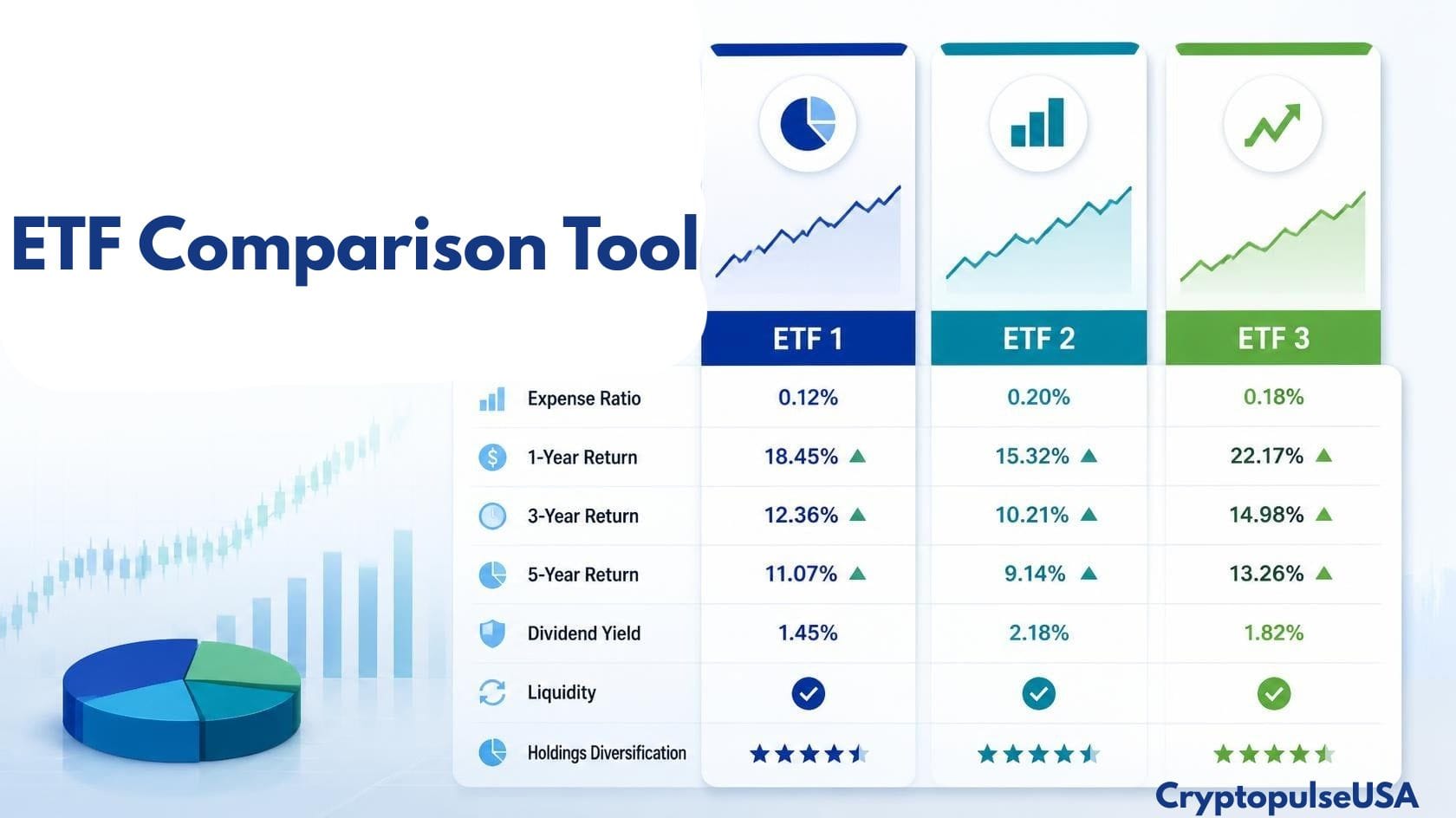
TSPY belongs to a growing group of ETFs that use options to generate income. When comparing TSPY with other income-focused ETFs, look beyond the headline yield.
Important comparison points include:
- Underlying asset
- Option strategy
- Distribution frequency
- Distribution history
- Total return
- Expense ratio
- Upside participation
- Downside exposure
- Portfolio diversification
- Fund size and trading liquidity
- Tax characteristics
- Track record
A fund with a higher distribution yield is not automatically producing a higher total return.
FAQs About TSPY ETF
What is TSPY ETF?
TSPY is the TappAlpha S&P 500 Growth & Daily Income ETF. It seeks current income and capital appreciation while seeking exposure to the S&P 500 Index through an actively managed strategy that uses daily call options.
Does TSPY pay monthly dividends?
TSPY currently expects, but does not guarantee, monthly distributions. The payment amount can change from month to month.
What is the TSPY dividend yield?
Recent market-data sources put TSPY’s distribution yield around 14%, but the exact figure changes as the ETF price and distributions change.
What was the latest TSPY distribution?
The latest reported distribution was $0.2954 per share, with an ex-dividend date of September 1, 2026, and a payment date of September 2, 2026.
When is the next TSPY dividend?
As of the latest information available for this article, the next distribution had not been officially declared. Third-party projected dates should not be treated as official announcements.
What is TSPY’s expense ratio?
The latest SEC prospectus lists total annual fund operating expenses of 0.71%, including a 0.68% management fee and 0.03% acquired fund fees and expenses.
What does TSPY hold?
TSPY primarily obtains S&P 500 exposure through ETFs and uses options as part of its income strategy. Its June 30, 2026 report showed VOO at 99.45% of net assets and a money market fund at 0.37%. Holdings can change.
Is TSPY the same as SPY?
No. SPY is designed to track the S&P 500, while TSPY is an actively managed fund that combines S&P 500 exposure with a daily covered-call strategy.
Is TSPY a traditional S&P 500 index ETF?
No. TSPY seeks exposure to the S&P 500 but is actively managed and uses an options strategy. Its prospectus specifically states that it is not a traditionally passively managed index fund.
Final Thoughts on TSPY ETF
TSPY is an income-focused ETF that combines S&P 500-related exposure with a daily covered-call strategy. Its monthly distributions are one of its most visible features, but the distribution yield should not be the only number investors examine. TSPY’s option strategy can affect both income and participation in market gains, while the ETF remains exposed to equity-market losses.
The most useful way to evaluate TSPY is to look at the distribution history, total return, NAV performance, expense ratio, holdings, option strategy and risks together. Because TSPY’s price, distributions, yield and holdings can change, readers should check the latest fund information before making an investment decision. TSPY’s official fund page and SEC filings provide the most authoritative information about its current strategy, expenses, holdings and distributions.
Also visit: ETF Guides & Analysis
This article is for educational purposes only and is not financial, investment, tax, or legal advice. ETF prices, distributions, holdings and yields can change. Investors should review the latest prospectus and consider their own circumstances before making investment decisions.


Leave a Reply