
If you are looking for a way to invest in the euro without opening a foreign-currency trading account, a euro ETF may be one option to understand. A euro ETF can give investors exposure to movements in the euro against the U.S. dollar. Other ETFs use the word “euro” because they invest in stocks from countries that use the euro. These are two very different investments. That distinction matters.
A fund designed to track the EUR/USD exchange rate is primarily a currency investment. A fund such as the iShares MSCI Eurozone ETF (EZU) invests in stocks of companies from developed countries that use the euro. EZU, for example, tracks the MSCI EMU Index and is an equity ETF rather than a pure euro-currency fund.
This guide explains what a euro ETF is, how euro currency ETFs work, what investors should look at before buying one, how currency movements affect returns, and how euro currency ETFs differ from Eurozone stock ETFs.
Important: This article is for educational purposes. ETFs can lose money, and a particular fund may not be suitable for every investor. Always review the fund’s current prospectus, fees, holdings, and risks before investing.
Also Read: Dollar ETF: Best US Dollar ETFs and How to Invest in USD
What Is a Euro ETF?
A euro ETF is an exchange-traded fund that provides exposure to the euro or to assets associated with the Eurozone. The term can describe several different types of funds, so it is important to look at what the ETF actually owns or tracks.
Euro currency ETFs
A euro currency ETF is designed to provide exposure to changes in the value of the euro relative to another currency, most commonly the U.S. dollar.
For a U.S. investor, the basic idea is straightforward:
- If the euro strengthens against the U.S. dollar, the ETF may benefit.
- If the euro weakens against the U.S. dollar, the ETF may lose value.
- Fund expenses and tracking differences can cause the ETF’s return to differ from the underlying currency movement.
Currency ETFs are commonly used for currency exposure, diversification, hedging, or tactical strategies.
Eurozone stock ETFs
A Eurozone ETF can instead invest in companies based in countries that use the euro. This means the investor is buying equity exposure, not simply betting on the euro.
For example, the iShares MSCI Eurozone ETF (EZU) seeks to track large- and mid-cap equities from developed countries using the euro. As of September 2026, its portfolio contained 216 holdings and its stated expense ratio was 0.50%.
The performance of a Eurozone stock ETF can therefore be affected by:
- Company earnings
- Stock-market valuations
- Interest rates
- Economic growth
- Sector performance
- Dividends
- Political and economic developments
- Currency movements
Euro Currency ETF vs. Eurozone ETF
This is one of the most important distinctions to understand before searching for a euro ETF.
| Feature | Euro Currency ETF | Eurozone Stock ETF |
|---|---|---|
| Main exposure | Euro currency | Eurozone companies |
| Main driver | EUR exchange-rate movement | Stock prices and company fundamentals |
| Typical benchmark | Currency/EUR exposure | Eurozone equity index |
| Example | FXE-type currency exposure | EZU |
| Dividend potential | Depends on fund structure | Can receive dividends from stocks |
| Currency risk | Central to the strategy | May be one component of total return |
| Equity-market risk | Generally not the primary exposure | Yes |
| Suitable search terms | Euro currency ETF, EUR/USD ETF | Eurozone ETF, European stock ETF |
The difference is important because someone searching for an ETF that tracks the euro may want currency exposure, while someone searching for the best Eurozone ETF may actually be looking for European stocks.
What ETF Tracks the Euro?
There is no single answer because different products can provide different forms of euro exposure. A currency ETF is generally designed to reflect changes in the target currency against the U.S. dollar or another reference currency. One of the best-known U.S.-listed examples associated with euro currency exposure is the Invesco CurrencyShares Euro Trust (FXE).
However, investors should check the fund’s current prospectus and issuer information before relying on historical descriptions, because fund structures, expenses, trading characteristics, and objectives can change.
The key question is not simply: “Does this ETF have euro in its name?”
Instead ask: “What exactly does this ETF track, and what assets does it hold?”
That single question can prevent a major mistake.
How Does a Euro Currency ETF Work?
A currency ETF does not work exactly like buying euros at a bank. The ETF is a traded security. You buy and sell shares through a brokerage account during market hours. The fund then uses its stated investment structure to provide exposure to the currency.
Currency ETFs can use different mechanisms, including:
- Currency deposits
- Foreign-currency instruments
- Futures
- Forward contracts
- Other derivatives
- Collateral or cash arrangements
The exact structure depends on the fund. That is why investors should read the fund’s prospectus rather than assuming every euro ETF works the same way.
A simple example
Imagine EUR/USD moves from 1.05 to 1.10. That means one euro becomes worth more U.S. dollars. If a euro currency ETF is designed to provide unleveraged exposure to the euro relative to the dollar, a stronger euro would generally be expected to support the ETF’s value, before considering expenses, tracking differences, and other factors. The opposite can happen when the euro falls against the dollar.
Why the return may not exactly match EUR/USD
Even when the underlying currency moves in one direction, an ETF’s return may differ because of:
- Expense ratios
- Trading costs
- Bid-ask spreads
- Fund structure
- Interest income
- Derivative costs
- Tracking differences
- Premiums or discounts to NAV
- Timing differences
Therefore, investors should not assume that a 5% move in EUR/USD automatically produces exactly a 5% return in a particular euro ETF.
Why Do Investors Use Euro ETFs?
Investors may use euro ETFs for several different reasons.
Getting euro exposure
A U.S. investor may want direct exposure to movements in the euro without holding euros in a traditional foreign-currency account.
Portfolio diversification
Currency exposure can behave differently from traditional U.S. assets. However, diversification does not eliminate risk. A foreign currency can decline significantly against the dollar.
Hedging currency exposure
An investor with international assets may have exposure to the euro already. Depending on the investor’s portfolio and strategy, currency instruments can sometimes be used as part of a hedging strategy. Hedging is not free or guaranteed to work perfectly. The hedge can introduce its own costs and risks.
Expressing a currency view
Some investors use currency ETFs as a tactical way to gain exposure to changes in exchange rates. That is a different objective from long-term ownership of European companies.
What Moves the Euro?
Understanding what affects the euro can help investors understand why a euro ETF’s price moves.
European Central Bank interest rates
Interest-rate expectations can affect currency markets. If markets expect European interest rates to rise relative to U.S. rates, the euro may receive support. If markets expect U.S. rates to remain significantly higher, the dollar may become relatively more attractive. The relationship is not automatic, however. Currency markets consider many factors simultaneously.
Federal Reserve policy
Because most U.S.-listed euro currency ETFs are ultimately evaluated in U.S. dollars, Federal Reserve policy can have a major influence on EUR/USD.
Changes in:
- Federal funds rate expectations
- Inflation expectations
- Treasury yields
- Monetary-policy guidance
- Economic growth expectations
can influence the dollar and therefore the EUR/USD exchange rate.
European economic growth
Economic data from the Eurozone can affect expectations about:
- Interest rates
- Corporate activity
- Consumer demand
- Inflation
- Government finances
These expectations can influence currency markets.
Inflation
Inflation affects purchasing power and can influence central-bank decisions. Unexpected changes in inflation can therefore create significant currency-market movements.
Political and fiscal developments
Government policy, elections, fiscal decisions, trade policies, and geopolitical events can all influence investor expectations. It is difficult to predict exactly how any individual event will affect the euro.
Global risk sentiment
Currencies can also respond to broader changes in investor risk appetite. This is one reason currency movements can sometimes appear disconnected from a single economic indicator.
Euro ETF Performance: What Actually Matters?
When researching euro ETF performance, don’t look only at the percentage shown on a price chart. An ETF’s performance can be affected by the euro-dollar exchange rate, distributions, fees, tracking difference, and the way the fund gets its exposure.
For a more complete picture, review the following factors.
Euro-to-Dollar Performance
Start by checking how the euro performed against the U.S. dollar over the same period. For example, if an ETF is designed to provide exposure to the EUR/USD exchange rate, its return will be closely connected to movements in the euro relative to the dollar.
This is particularly important for U.S. investors because a stronger euro can increase the dollar value of euro exposure, while a weaker euro can reduce it. However, the ETF’s return may not exactly match the EUR/USD movement because of expenses, tracking differences, trading costs, and the fund’s specific structure.
Total Return vs. Share Price Return
Don’t rely solely on the ETF’s share-price chart. Total return generally provides a more complete picture because it accounts for distributions, such as dividends or other income, when applicable.
For a currency-focused ETF, the difference between price return and total return may be relatively small compared with an equity ETF, but it is still important to check what performance measure a fund provider is reporting. When comparing two ETFs, make sure you are comparing the same type of return over the same time period.
Benchmark and Tracking Difference
Check how closely the ETF has followed its stated benchmark or underlying exposure. The tracking difference is the gap between the fund’s actual return and the return of the benchmark or target exposure over a particular period. A small difference can arise from:
- Expense ratios
- Trading and transaction costs
- Bid-ask spreads
- Cash holdings
- Taxes or withholding costs where applicable
- Portfolio implementation
- Rebalancing
- The fund’s use of physical or derivative-based exposure
A fund with a low expense ratio does not automatically have the smallest tracking difference, so looking at both figures can provide a better comparison.
Volatility
Euro ETF performance should also be evaluated alongside volatility. An ETF may have a positive return over several years but experience significant short-term price swings along the way.
For example, an investor looking only at a five-year return could miss substantial periods when the euro weakened sharply against the dollar. Looking at monthly or annual returns can help show how consistently or inconsistently the ETF performed.
Maximum Drawdown
Maximum drawdown measures the largest decline from a previous peak to a subsequent low during a specified period. It can help illustrate how severe a historical decline was.
For example, if an ETF reached a high and later fell 15% before recovering, that decline would be part of its historical drawdown profile. Maximum drawdown does not tell you how much the ETF will fall in the future. It is simply a historical risk measurement that can add context to the headline return.
Currency Conversion Matters for U.S. Investors
Another factor that is sometimes overlooked is the investor’s own reporting currency. A U.S. investor measuring returns in dollars can experience a different result from an investor measuring the same investment in euros. Suppose the underlying euro exposure rises in euro terms, but the euro simultaneously loses value against the dollar. The dollar-denominated return could be significantly smaller than the return measured in euros. This is why investors should check both the underlying asset performance and the relevant exchange-rate movement.
Hedged vs. Unhedged Euro Exposure
When comparing euro-related ETFs, determine whether the fund is currency-hedged or unhedged. An unhedged fund generally leaves the investor exposed to changes in the euro-dollar exchange rate.
A hedged strategy attempts to reduce the impact of currency fluctuations through hedging instruments. However, hedging is not free and may introduce additional costs, implementation differences, and tracking effects. Therefore, two ETFs with similar underlying investments can produce different returns depending on their currency-hedging approach.
Look at Performance Over Multiple Time Periods
Instead of focusing on one annual return, compare performance across several periods, such as:
- 1 month
- 3 months
- 6 months
- 1 year
- 3 years
- 5 years
- Since inception
Longer periods can provide more context, while shorter periods can show how the ETF has behaved during recent currency movements. Always check the as-of date because ETF performance changes continuously.
Don’t Ignore Liquidity and Trading Costs
Historical performance isn’t the only consideration.
For actively traded ETFs, investors should also examine:
- Average trading volume
- Bid-ask spread
- Assets under management
- Premium or discount to NAV
- Trading history
- Expense ratio
A fund with a narrow bid-ask spread can potentially be cheaper to trade than a less liquid ETF, even when their published expense ratios are similar.
A Better Way to Evaluate Euro ETF Performance
For a more complete comparison, look at return + risk + costs + tracking quality, rather than one headline number.
| Metric | What it tells you |
|---|---|
| Currency return | How the euro moved against the dollar |
| Total return | Broader investment performance, including applicable distributions |
| Tracking difference | How closely the ETF followed its target |
| Expense ratio | The fund’s stated annual operating expense |
| Volatility | How much returns have fluctuated |
| Maximum drawdown | Historical peak-to-trough decline |
| Bid-ask spread | Potential trading cost |
| Liquidity | How easily the ETF can generally be traded |
| Hedging method | Whether currency exposure is reduced |
| Time period | Whether performance is short- or long-term |
Euro ETF Fees and Expense Ratios
Costs matter because they reduce the amount of an investor’s return that remains after expenses. When comparing euro ETFs, look at more than the expense ratio.
Expense ratio
The expense ratio represents the fund’s stated operating expenses. A lower expense ratio does not automatically make one ETF more appropriate, but it is an important comparison point.
Bid-ask spread
The bid is the price at which buyers are willing to purchase shares. The ask is the price at which sellers are willing to sell. The difference is the bid-ask spread. A wider spread can increase the effective cost of entering or exiting a position.
Brokerage costs
Many brokers offer commission-free ETF trades, but investors should still check their broker’s current pricing. Commission-free does not mean cost-free. The spread and other trading costs can still matter.
Tracking difference
A fund may have a low expense ratio but still experience differences from its underlying benchmark because of implementation costs and other factors.
What Is NAV and Why Does It Matter?
NAV, or net asset value, represents the value of a fund’s assets minus its liabilities, calculated on a per-share basis. An ETF also trades at a market price during the trading day. These two prices can differ.
The SEC explains that an ETF’s market price can fluctuate during the trading day, while NAV is calculated based on the value of the fund’s assets. The ETF structure includes an arbitrage mechanism intended to help keep the market price near NAV, but that mechanism does not eliminate every premium or discount.
Premium to NAV: If an ETF trades above its NAV, it is trading at a premium.
Discount to NAV: If it trades below NAV, it is trading at a discount.
These differences can become more noticeable during periods of market stress or lower liquidity.
Euro ETF Liquidity
Liquidity is another factor beginners often overlook. A fund may have a large asset base but still experience different trading conditions at different times of day.
When evaluating liquidity, look at:
- Average daily trading volume
- Bid-ask spread
- Assets under management
- Market-maker activity
- Premium/discount history
Do not judge liquidity from trading volume alone. A narrow bid-ask spread can be particularly useful for investors who trade frequently.
How to Buy a Euro ETF
For a U.S. investor, buying a U.S.-listed euro ETF generally follows the same basic process as buying another ETF.
Step 1: Open a brokerage account
Use a brokerage account that provides access to the ETF you are researching.
Step 2: Research the fund
Before placing an order, review:
- Fund objective
- Benchmark
- Holdings or underlying exposure
- Expense ratio
- Trading volume
- Bid-ask spread
- Historical performance
- Distribution policy
- Risks
- Prospectus
Step 3: Confirm the ticker
Make sure you have identified the correct ETF because ETF names can be surprisingly similar.
Step 4: Check the current market price
The market price can change throughout the trading day.
Step 5: Decide what type of order you want
A market order generally seeks execution at the available market price. A limit order allows the investor to specify the maximum price they are willing to pay when buying or minimum price they are willing to accept when selling.
The appropriate order type depends on the investor’s circumstances and strategy.
Step 6: Monitor the position
After buying, monitor the fund according to your investment plan. You do not need to react to every daily movement in EUR/USD.
Euro ETF vs. Buying Euros Directly
An ETF is not the same as holding euros in a bank or currency account.
| Factor | Euro ETF | Holding Euros |
|---|---|---|
| Traded on exchange | Yes, for exchange-listed ETFs | Usually no |
| Intraday trading | Yes | Depends on account |
| Brokerage account | Usually required | Not necessarily |
| Fund expenses | Yes | Depends on account |
| Bid-ask spread | Yes | Currency-conversion spread may apply |
| Securities-market risk | Yes | Generally different |
| Currency exposure | Yes, depending on fund | Direct |
| Interest earned | Depends on structure | Depends on account/product |
The better choice depends on why someone wants euro exposure. If the goal is simply to hold euros for travel or future spending, an ETF may not be the same solution as maintaining a euro-denominated account.
Euro ETF vs. Eurozone Stock ETF
This comparison deserves special attention. Suppose an investor buys a Eurozone stock ETF. That investor owns exposure to companies. The value can rise because:
- Corporate profits increase
- Stock valuations rise
- Dividends are paid
- Economic conditions improve
But the value can also fall because of stock-market declines. A euro currency ETF is fundamentally different. Its primary exposure is to the value of the currency.
Example
Imagine two investments: Investment A: Euro currency ETF and Investment B: Eurozone equity ETF If European stocks rise 10% but the euro falls 8% against the dollar, the two investments can have very different returns. Investment B is affected by both equity performance and currency translation. Investment A is primarily focused on currency exposure. That is why investors should identify their objective before selecting an ETF.
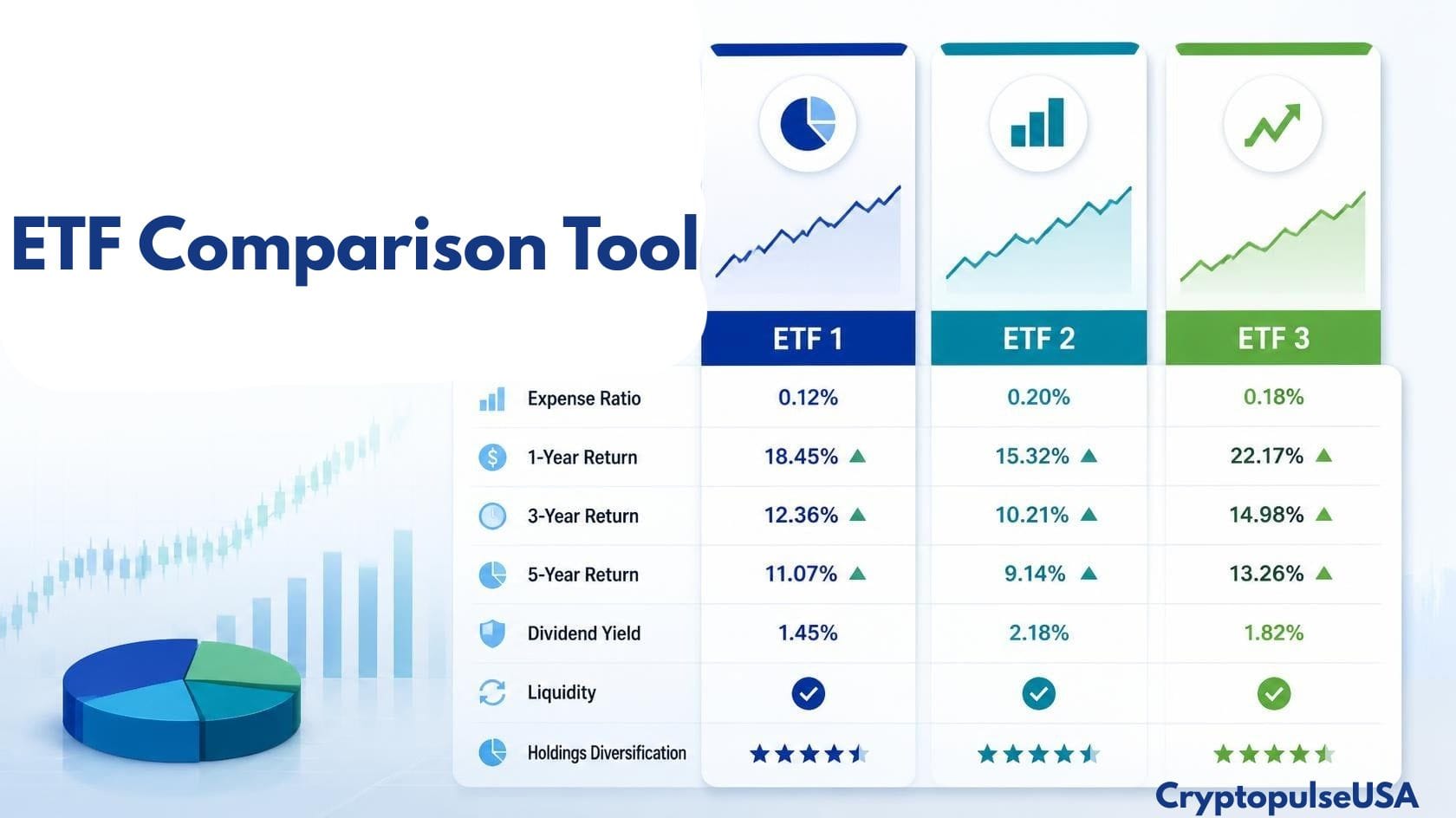
Also Read: ETF Comparison Tool: Compare ETFs Side by Side
What Is a Eurozone ETF?
A Eurozone ETF is generally an ETF that invests in companies located in countries participating in the euro area or tracks a Eurozone equity index. One example is EZU. The iShares MSCI Eurozone ETF currently describes its objective as tracking large- and mid-cap equities from developed countries using the euro. The fund had 216 holdings as of September 2026 and a 0.50% expense ratio on the issuer’s published data. Because this is an equity fund, its risk profile differs from a currency ETF.
What companies can be inside a Eurozone ETF?
Depending on the index, a Eurozone ETF can hold companies from countries such as:
- France
- Germany
- Italy
- Spain
- Netherlands
- Belgium
- Other participating developed markets represented by the relevant index
The exact country weights and holdings change over time. Always check the ETF issuer’s current holdings instead of relying on an old list.
Does a Euro ETF Pay Dividends?
This depends on the ETF. A currency-focused ETF may not behave like a traditional stock ETF that owns dividend-paying companies. A Eurozone equity ETF, by contrast, can receive dividends from the companies it owns and may distribute income to shareholders. For example, EZU’s issuer information lists a semi-annual distribution frequency. Therefore, if you are searching for a euro ETF dividend, first determine whether you mean:
- Income generated by a currency-related fund, or
- Dividends received from European companies held inside an equity ETF.
These are not the same thing.
Also Read: Weekly Dividend ETF: How Weekly Income Works, Yields, Risks & More
Euro ETF Yield: What Does It Mean?
Yield can be misleading if you compare completely different ETF types. For an equity ETF, yield can relate to dividends paid by the underlying companies. For a currency ETF, the economics can be different. The fund’s structure may generate interest or other income depending on how the currency exposure is implemented. Always check the fund’s official distribution information rather than assuming that a quoted yield represents a guaranteed income stream.
Risks of Euro ETFs
Euro ETFs are not risk-free.
Currency risk
The most obvious risk is that the euro falls against the U.S. dollar. For a U.S. investor, the relevant return is ultimately measured in dollars. The SEC notes that changes in foreign-exchange rates can cause the value of foreign-currency investments to decline relative to the U.S. dollar.
Interest-rate risk
Changes in expectations for European or U.S. interest rates can affect currency markets.
Political risk
Political events in Europe or the United States can affect currencies and financial markets.
Economic risk
Weak economic growth, recession concerns, inflation, or financial instability can influence the euro.
Liquidity risk
An ETF can experience wider spreads or difficulty trading at expected prices during stressed markets.
Tracking risk
An ETF may not perfectly reproduce its intended benchmark or exposure. The SEC specifically notes that ETFs can experience tracking risk and that market prices can differ from NAV.
Leverage risk
Some currency products use leverage. A leveraged euro ETF or exchange-traded product can behave very differently from an unleveraged euro ETF.
Daily compounding can also produce results over longer periods that differ substantially from simply multiplying the currency’s cumulative return by the leverage factor. Beginners should understand the product structure before using leveraged currency products.
Can a Euro ETF Lose Money Even If the Euro Is Rising?
Yes. A fund’s return does not necessarily equal the headline EUR/USD move.
Possible reasons include:
- Fund expenses
- Tracking differences
- Trading costs
- Interest-rate effects
- Derivative costs
- Premium or discount to NAV
- Differences in measurement periods
The reverse can also happen. A fund may experience factors that partially offset a currency decline. The exact effect depends on the fund’s structure.
Euro ETF Tax Considerations for U.S. Investors
Tax treatment can vary based on the ETF, account type, distributions, holding period, and the investor’s circumstances. For that reason, there is no single “euro ETF tax rate” that applies to everyone.
A U.S. investor should consider:
- Whether the ETF is held in a taxable brokerage account
- Whether the ETF makes distributions
- Whether shares are sold for a gain or loss
- Holding period
- Account type
- Potential foreign-tax considerations
- Applicable IRS rules
Tax rules can change, and individual circumstances matter. For significant investments or complicated tax situations, consider consulting a qualified tax professional.
How to Compare Euro ETFs
If you find several ETFs that appear to provide euro exposure, use a consistent checklist.
1. Investment objective
Read exactly what the ETF is designed to track.
2. Underlying exposure
Find out whether the fund owns:
- Currency
- Securities
- Futures
- Forward contracts
- Other derivatives
3. Expense ratio
Compare the stated annual fund expenses.
4. Bid-ask spread
Look at typical trading spreads rather than only the expense ratio.
5. Trading volume
Higher volume can sometimes support better trading conditions, but volume should not be considered by itself.
6. Assets under management
Fund size can provide useful context about adoption and liquidity.
7. Tracking difference
Compare actual fund performance with the intended benchmark or exposure.
8. Distribution policy
Determine whether the ETF distributes income and how frequently.
9. Fund history
Longer operating history can provide more historical information, although it does not guarantee future results.
10. Structure and counterparty exposure
For derivative-based products, understand how the exposure is created and what counterparties or collateral arrangements are involved.
A Simple Euro ETF Research Checklist
Before buying any euro ETF, ask these questions:
| Question | Why it matters |
|---|---|
| What exactly does it track? | Defines your actual exposure |
| Is it currency or equity? | Avoids choosing the wrong type of ETF |
| What is the expense ratio? | Shows stated fund costs |
| How liquid is it? | Helps evaluate trading conditions |
| What is the bid-ask spread? | Indicates a potential trading cost |
| Does it use derivatives? | Adds structural considerations |
| Does it distribute income? | Important for cash flow and taxes |
| How has it tracked its benchmark? | Shows implementation differences |
| What are the major risks? | Helps identify potential loss scenarios |
| Is it leveraged? | Determines how aggressively it responds to movements |
| What does the prospectus say? | Provides the fund’s official details |
Common Mistakes When Buying a Euro ETF
Assuming every “European” ETF tracks the euro
It doesn’t. A European stock ETF can own companies across many countries and currencies.
Confusing Eurozone stocks with euro currency exposure
A Eurozone equity ETF can fall because stocks decline even if the euro rises.
Looking only at the expense ratio
A fund with a low expense ratio can still have meaningful trading costs or tracking differences.
Ignoring the U.S. dollar
For a U.S. investor, EUR/USD is central to understanding currency exposure.
Assuming past currency performance will continue
Currencies can move in both directions and can respond rapidly to changes in monetary policy and economic expectations.
Ignoring spreads
A wide bid-ask spread can matter, particularly for short-term traders.
Buying a leveraged ETF without understanding daily compounding
Leveraged products are not simply ordinary ETFs with a bigger return.
Treating currency ETFs like dividend stocks
Currency exposure and equity income are different concepts.
Using outdated ETF information
ETF names, fees, holdings, benchmarks, and structures can change. Always verify current information with the fund issuer and prospectus.
Who Might Consider a Euro Currency ETF?
Different investors may have different reasons for researching euro currency ETFs.
A euro currency ETF may be relevant to someone who:
- Wants exposure to the euro
- Has a portfolio with currency exposure that they want to manage
- Wants to diversify currency exposure
- Is researching EUR/USD movements
- Wants exchange-traded access to a currency strategy
That does not mean the ETF is appropriate for every investor. The right product depends on the purpose of the investment, risk tolerance, time horizon, and portfolio.
Who Might Prefer a Eurozone Stock ETF?
A Eurozone equity ETF may be more relevant to someone whose objective is exposure to European companies rather than the euro itself.
For example, an investor researching:
- European companies
- Eurozone stock markets
- International diversification
- European dividends
- Eurozone equity indexes
may be looking for an equity ETF rather than a currency ETF. Again, the distinction comes down to the exposure you actually want.
Euro ETF vs. EUR/USD Trading
A euro ETF and direct EUR/USD trading can both provide exposure to movements in the euro, but they are different financial products with different structures.
Euro ETF
With a euro-focused ETF, you buy and sell ETF shares through a securities brokerage account, similar to other exchange-traded funds. Depending on the fund, the ETF may provide euro exposure through currency holdings, deposits, derivatives, or another investment structure. Always check the fund’s prospectus and investment objective to understand exactly how the exposure is created.
Potential costs can include:
- Expense ratio
- Brokerage commissions, if applicable
- Bid-ask spread
- Trading costs
- Premium or discount to NAV
- Currency-related costs
The ETF’s market price can also differ temporarily from its underlying net asset value (NAV).
EUR/USD Forex Trading
With EUR/USD trading, you are trading the exchange rate between the euro and U.S. dollar. The exact product matters. Depending on the platform and jurisdiction, EUR/USD exposure may be available through spot forex, futures, CFDs, options, or other instruments. These products can have substantially different rules, costs, leverage, and risks. For leveraged products, traders may also face:
- Margin requirements
- Financing or overnight charges
- Leverage-related losses
- Position liquidation or margin calls
- Contract-specific costs and expiration rules
Key Differences
| Factor | Euro ETF | EUR/USD Trading |
|---|---|---|
| Basic structure | Exchange-traded fund | Currency trading or derivative |
| Where traded | Stock exchange | Forex/derivatives platform or exchange, depending on product |
| Leverage | Usually limited unless specifically designed as leveraged ETF | Often available, depending on product and jurisdiction |
| Margin | Generally not required for a standard unleveraged ETF purchase | Common for leveraged forex and derivatives |
| Trading hours | Usually follows the ETF’s exchange trading hours | Depends on the specific forex or derivative market |
| Main exposure | Depends on the ETF’s investment strategy | EUR/USD exchange rate |
| Ongoing fund expenses | May apply | Depends on the trading product |
| Bid-ask spread | Applies | Applies |
| Financing costs | Generally not the same as leveraged forex | May apply to leveraged/overnight positions |
| Tax treatment | Depends on the investor’s country and product | Depends on the investor’s country and product |
Which One Tracks the Euro More Directly?
This depends on the specific product. A euro currency ETF may aim to provide exposure to the euro’s value relative to the U.S. dollar, but its return can differ from the EUR/USD exchange-rate movement because of expenses, implementation methods, tracking differences, cash positions, and other factors.
Direct EUR/USD exposure can be more closely tied to the currency pair itself, but leverage and margin can substantially change the risk profile.
Don’t Compare Them by Return Alone
A common mistake is comparing the historical return of a euro ETF with the return of a leveraged EUR/USD position as if they were identical investments. They aren’t.
Before comparing them, check:
- What exactly does the product track?
- Is the exposure leveraged?
- Are there financing or overnight costs?
- What are the trading spreads?
- How liquid is the product?
- How is the product taxed in your jurisdiction?
- What happens if the position moves sharply against you?
Are Euro ETFs Good for Long-Term Investing?
There is no universal answer. The purpose of the investment matters. A currency ETF can have a very different long-term role from an equity ETF. Currencies do not represent ownership of businesses in the same way stocks do. Therefore, someone looking for long-term growth from corporate earnings may be researching a very different product from someone seeking direct euro exposure.
The important question is: What exposure are you trying to add to your portfolio?
Once that is clear, it becomes easier to evaluate whether a currency ETF, Eurozone equity ETF, foreign-currency account, or another instrument matches that objective.
What to Look for in a Euro ETF Fact Sheet
A fund fact sheet can save you considerable time.
Look for:
- Fund objective
- Benchmark
- Ticker
- Inception date
- Expense ratio
- Assets
- Average trading volume
- Holdings
- Distribution frequency
- Performance
- Risk statistics
- Premium/discount information
Do not rely only on third-party ETF summaries. The issuer’s current documents and prospectus are the primary places to verify the fund’s stated strategy and risks.
FAQs About Euro ETFs
What is the best euro ETF?
There is no single euro ETF that is appropriate for every investor. The answer depends on whether you want direct currency exposure, Eurozone stocks, hedging, income, or another objective. Instead of choosing based only on a “best” list, compare the ETF’s objective, structure, costs, liquidity, tracking characteristics, and risks.
What ETF tracks the euro?
Currency ETFs can be designed to provide exposure to movements in the euro relative to the U.S. dollar. FXE is a well-known U.S.-listed example associated with euro currency exposure. Investors should verify the fund’s current objective and structure using its latest issuer documents before investing.
Is FXE a euro ETF?
Yes, FXE is associated with euro currency exposure rather than being a broad Eurozone stock ETF. That distinction is important because a currency ETF and a Eurozone equity ETF can respond very differently to the same economic event.
What is the difference between a euro ETF and a Eurozone ETF?
A euro currency ETF primarily provides exposure to the value of the euro. A Eurozone ETF generally invests in companies from the Eurozone. The first is primarily a currency exposure. The second is an equity exposure.
Can I buy a euro ETF in the United States?
U.S. investors can access U.S.-listed ETFs through eligible brokerage accounts. Availability depends on the broker and the specific ETF. Always verify the ticker and trading venue before placing an order.
Does a euro ETF pay dividends?
It depends on the fund. Currency ETFs and equity ETFs have different sources of potential income. A Eurozone stock ETF can receive dividends from the companies it owns, while a currency-focused product has a different structure.
Are euro ETFs risky?
Yes. Risks can include currency movements, market volatility, liquidity, tracking differences, structural risks, and changes in interest rates and economic conditions. The specific risks depend on the ETF.
Can a euro ETF lose value when the euro falls?
Yes. For a currency ETF designed to provide unleveraged euro exposure against the U.S. dollar, a decline in the euro relative to the dollar can generally put downward pressure on the ETF, before considering fees and tracking effects.
What affects euro ETF prices?
For a currency ETF, important factors can include:
- EUR/USD movements
- ECB policy
- Federal Reserve policy
- Interest-rate expectations
- Inflation
- European economic data
- U.S. economic data
- Political developments
- Global risk sentiment
For Eurozone equity ETFs, company and stock-market factors also become important.
Is a euro ETF the same as holding euros?
No. A euro ETF is a financial security that trades on an exchange. Holding euros directly means owning the currency itself, usually through a bank or currency account. The costs, risks, tax treatment, and practical uses can differ.
Final Thoughts on Euro ETFs
A euro ETF can mean different things, and understanding that distinction is the first step. If your goal is exposure to the euro itself, you are generally looking for a currency ETF designed around euro movements. If your goal is to invest in companies located in the Eurozone, you are looking for a Eurozone equity ETF. Those investments can behave very differently.
Before buying any ETF, look beyond the ticker and headline performance. Check what the fund actually tracks, how the exposure is created, what it costs, how liquid it is, how closely it has tracked its benchmark, and what risks are identified in its current prospectus. For U.S. investors, the relationship between the euro and U.S. dollar is especially important because currency movements can materially affect dollar-denominated returns.
The best starting point is therefore not simply asking, “Which euro ETF should I buy?”
It is asking: “What type of euro exposure am I actually trying to get?”
Once you answer that question, you can compare the relevant ETFs on a much more meaningful basis.
For More Guides Please Check: ETF Guides & Analysis

Leave a Reply