
Storing cryptocurrency in wallets is often presented as the safest way to protect digital assets. While it is true that wallets give users more control compared to exchanges, they are not risk-free. In fact, many users lose funds not because of market crashes, but because of hidden risks of crypto in wallets that are rarely explained in beginner guides.
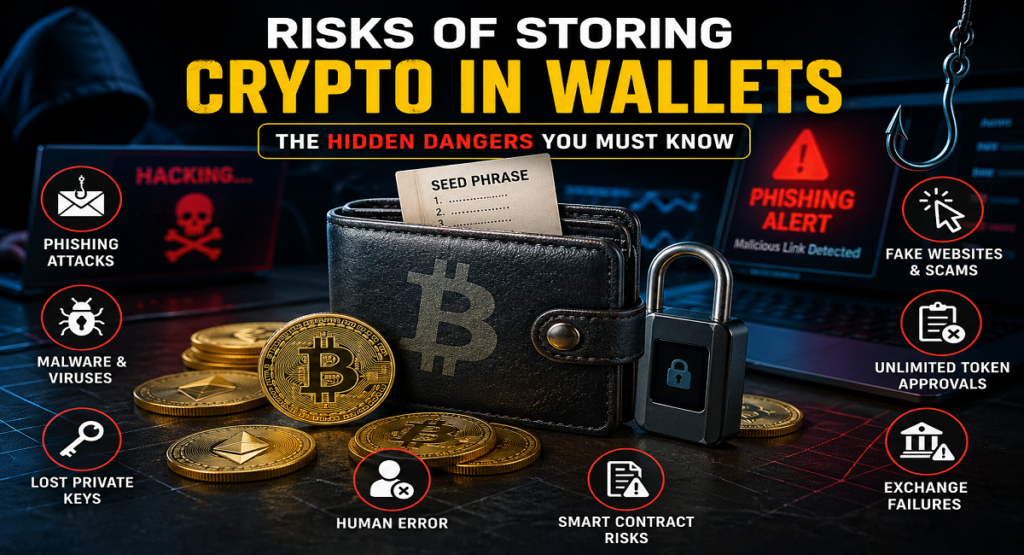
This article breaks down the real risks of storing crypto in wallets, including hot wallet vulnerabilities, cold wallet limitations, human error, and modern attack methods that most blogs completely ignore. If you are searching for “risks of storing crypto in wallets safely” or “how secure are crypto wallets really”, this guide will give you a clearer and more realistic picture.
Understanding the Basic Risk: Hot Wallet vs Cold Wallet Exposure
One of the most discussed topics in crypto security is the difference between hot wallets and cold wallets. Hot wallets are connected to the internet, which makes them convenient but also more exposed to hacking attempts. Cold wallets, on the other hand, store private keys offline, reducing online attack risks.
However, many users wrongly assume that cold wallets are completely safe. While they do reduce online exposure, they still depend heavily on user behavior. If your seed phrase is compromised or stored insecurely, even a cold wallet cannot protect your funds. This is why “hot wallet vs cold wallet security risks” remains one of the most important comparisons in crypto safety discussions.
The Biggest Risk Most People Ignore: Human Error
The most dangerous threat to your crypto wallet is not always hackers,it is human mistake. A large number of losses occur because users unknowingly approve malicious transactions or fall for fake websites and applications.
For example, when interacting with decentralized applications (dApps), users often approve smart contract permissions without understanding what they allow. Some approvals give unlimited access to your wallet, meaning attackers can drain funds later without additional confirmation.
Simple actions like clicking a fake link, copying the wrong wallet address, or approving a suspicious transaction can lead to complete loss of funds. This is why “crypto wallet mistakes that cause loss of funds” is becoming one of the most searched topics among beginners.
Smart Contract Risks and DeFi Exploits
Modern crypto usage is no longer limited to storing coins. Many users interact with DeFi platforms, NFTs, and staking protocols. While these systems offer opportunities, they also introduce smart contract risks that are often ignored in beginner content.
A smart contract may contain vulnerabilities or malicious code. Once you approve a transaction, you are essentially giving permission to interact with your wallet. Attackers often exploit this by tricking users into signing harmful approvals.
One of the most common issues today is unlimited token approval risk, where a user unknowingly allows a contract to spend all tokens in their wallet. This is one of the biggest reasons behind wallet drain incidents in DeFi.
Advanced Threats: Phishing, Address Poisoning, and Clipboard Attacks
phishing is also a threat, but modern attacks have become much more advanced. Fake websites now closely mimic real crypto platforms, making it extremely difficult for beginners to detect scams.
A newer and highly dangerous method is address poisoning. In this attack, scammers send small transactions to your wallet from addresses that look similar to your own or previously used ones. When you copy-paste from transaction history, you may accidentally send funds to the attacker.
Another silent threat is clipboard hijacking, where malware replaces a copied wallet address with the attacker’s address. If you don’t double-check carefully, your funds are gone in seconds.
These evolving threats show that “advanced crypto wallet hacking methods” are far more complex than traditional hacking attempts.
Device-Level Risks and Hardware Wallet Misconceptions
Many users believe that hardware wallets are completely immune to attacks. While they are significantly safer, they are not flawless. If your device is physically compromised or if you approve malicious transactions without understanding them, your funds are still at risk.
Even smartphones and computers used to access wallets can be compromised by malware or hidden tracking software. In some cases, attackers do not even need your private key, they only need to manipulate what you see on your screen.
This makes it important to understand “are hardware wallets 100% safe” is not a simple yes or no question. They improve security, but they do not eliminate risk completely.
UX Complexity: The Hidden Danger No One Talks About
One of the most overlooked risks of storing crypto in wallets is user interface complexity. Crypto systems are often not beginner-friendly, and small misunderstandings can lead to major losses.
Users may not fully understand gas fees, transaction permissions, or contract interactions. As a result, they may unknowingly approve actions that are irreversible.
This problem becomes even more serious in DeFi platforms where multiple steps are required. The more complex the system, the higher the chance of user error.
Why “Not Your Keys, Not Your Crypto” Is Not the Full Story
The popular phrase “not your keys, not your crypto” encourages users to take control of their funds through self-custody. While this is generally true, it also hides an important reality: full control comes with full responsibility.
When you hold your own private keys, there is no customer support, no password reset, and no recovery option if something goes wrong. This means users must handle security, backups, and transaction verification entirely on their own.
So while self-custody is powerful, it also increases the risk of permanent loss if mistakes are made.
Final Thoughts: Real Crypto Wallet Security Is About Awareness, Not Just Tools
The risks of storing crypto in wallets go far beyond basic hacking threats. While tools like hardware wallets, 2FA, and secure apps help improve safety, they cannot fully protect users from human error, smart contract risks, and evolving cyber attacks.
The most important takeaway is that crypto wallet security is not just about choosing the right wallet, it is about understanding how attacks happen in real life. Users who learn how phishing works, how smart contract approvals function, and how to verify transactions are far less likely to lose funds.
If you are serious about protecting your assets, focus less on “perfect security tools” and more on building strong security habits. In crypto, awareness is your strongest defense.
FAQ
What are the main risks of storing crypto in wallets?
The main risks include phishing attacks, malware infections, loss of seed phrases, smart contract vulnerabilities, and human error. Even secure wallets can be compromised if users approve malicious transactions or store recovery phrases insecurely.
What is the biggest risk of storing crypto in wallets?
The biggest risk is human error. Many users lose funds by clicking phishing links, approving fake smart contracts, or storing seed phrases insecurely. Most crypto losses happen due to user mistakes, not direct hacking.
Can hackers steal crypto from a wallet?
Yes, hackers can steal crypto through phishing websites, malware, clipboard hijacking, or by tricking users into approving malicious smart contract permissions. Once access is granted, funds can be drained instantly.
What is a seed phrase risk in crypto wallets?
A seed phrase is the master key to your wallet. If someone gets access to it, they can fully control your funds. Losing it or storing it online (like screenshots or cloud storage) creates a major security risk.
Is a hardware wallet 100% safe?
No. Hardware wallets are highly secure but not completely risk-free. Users can still be tricked into approving malicious transactions, and physical theft or poor backup practices can lead to loss of funds.







Leave a Reply