
The rise of cryptocurrency has pushed traditional financial institutions to adapt, and fidelity crypto is one of the most talked about examples. Offered by Fidelity Investments, this platform allows users to buy, sell, and hold digital assets within a familiar investment environment. For beginners and long-term investors, it promises simplicity and trust,but there’s more beneath the surface that most reviews don’t fully explain.
What Is Fidelity Crypto
Fidelity crypto is a cryptocurrency trading and custody service offered by Fidelity Investments that allows users to buy, sell, hold, and manage digital assets like Bitcoin and Ethereum within a traditional investment account. Unlike typical crypto exchanges, it is designed to feel similar to stock investing—simple, integrated, and beginner-friendly.
At its core, fidelity crypto works by combining trading + custody + portfolio tracking into one platform. This means you don’t need a separate crypto wallet or exchange account. Instead, your crypto sits alongside your stocks and other investments, giving you a complete financial overview in one place
How Fidelity Crypto Works
When people search for fidelity crypto account how to open, they’re usually looking for an easy entry into crypto without dealing with complex wallets or exchanges. Fidelity delivers on that expectation by offering a smooth onboarding process. You simply create or log into your account, verify your identity, and enable crypto trading.
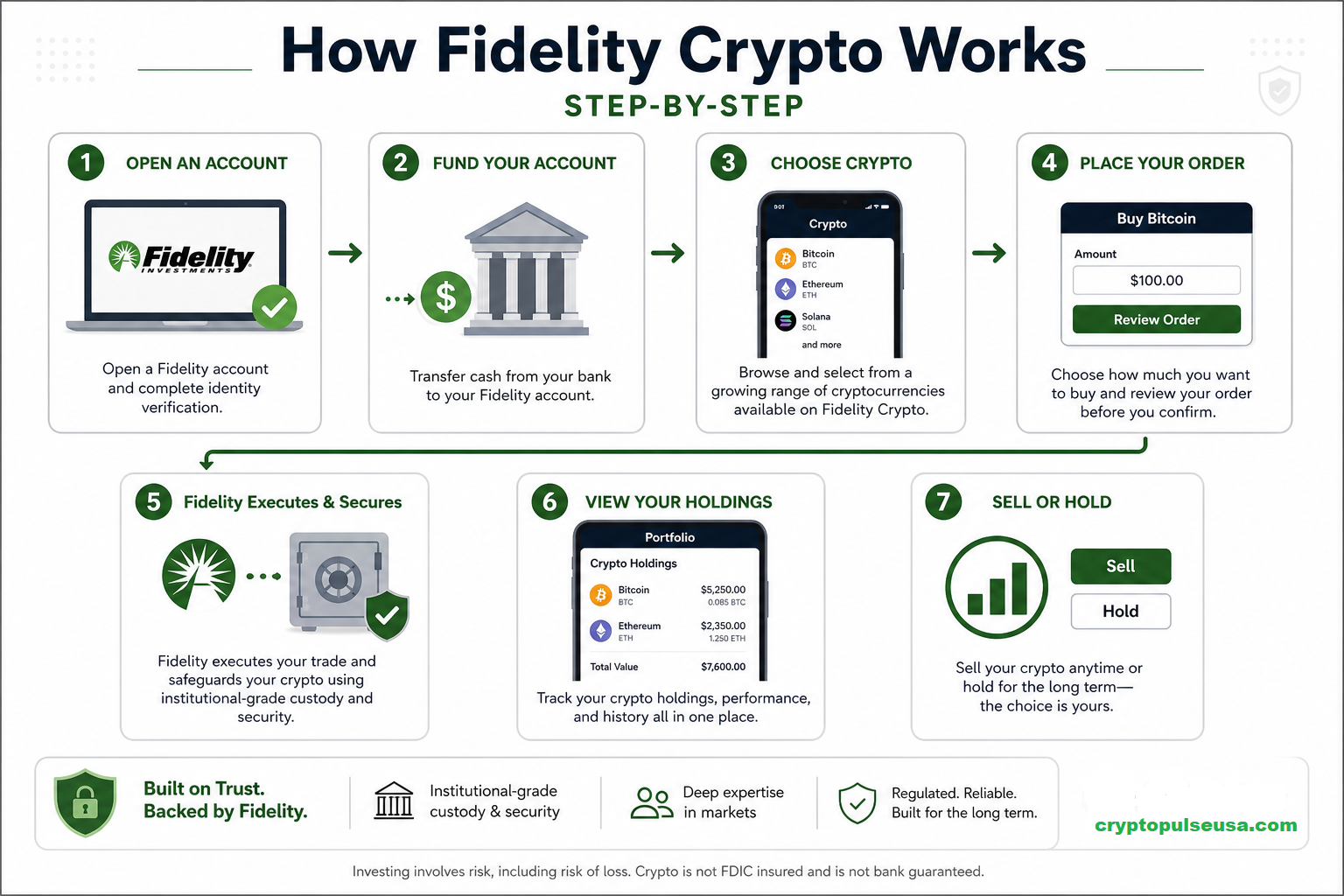
To understand how fidelity crypto works, it helps to break the process into simple steps.
First, you need to open an Fidelity account. If you already have a Fidelity brokerage account, you can enable crypto trading directly from there. If not, you’ll create one and link it to your crypto account. This connection is important because your brokerage account is used to fund your crypto purchases.
Once your account is set up, you can deposit money and start trading. The platform allows you to place buy or sell orders for cryptocurrencies like Bitcoin or Ethereum. Orders are executed through liquidity providers, meaning Fidelity finds the best available market price for your trade.
After purchasing, your crypto is stored securely by Fidelity. Unlike decentralized wallets, you don’t hold the private keys yourself. Instead, Fidelity manages custody through its specialized division, ensuring your assets are protected while remaining accessible for trading.
Another appealing feature is the low barrier to entry. The fidelity crypto minimum investment amount is small, which means you can start investing with just a few dollars. This makes it especially attractive for beginners who want to test the waters without committing large amounts of capital.
Custody Model: How Your Crypto Is Stored
A key part of fidelity crypto is its custody system, which is very different from typical crypto wallets.
Fidelity uses what’s called an omnibus storage structure, where customer assets are pooled together but tracked individually. This system is similar to how traditional financial assets are managed and allows for efficient transactions.
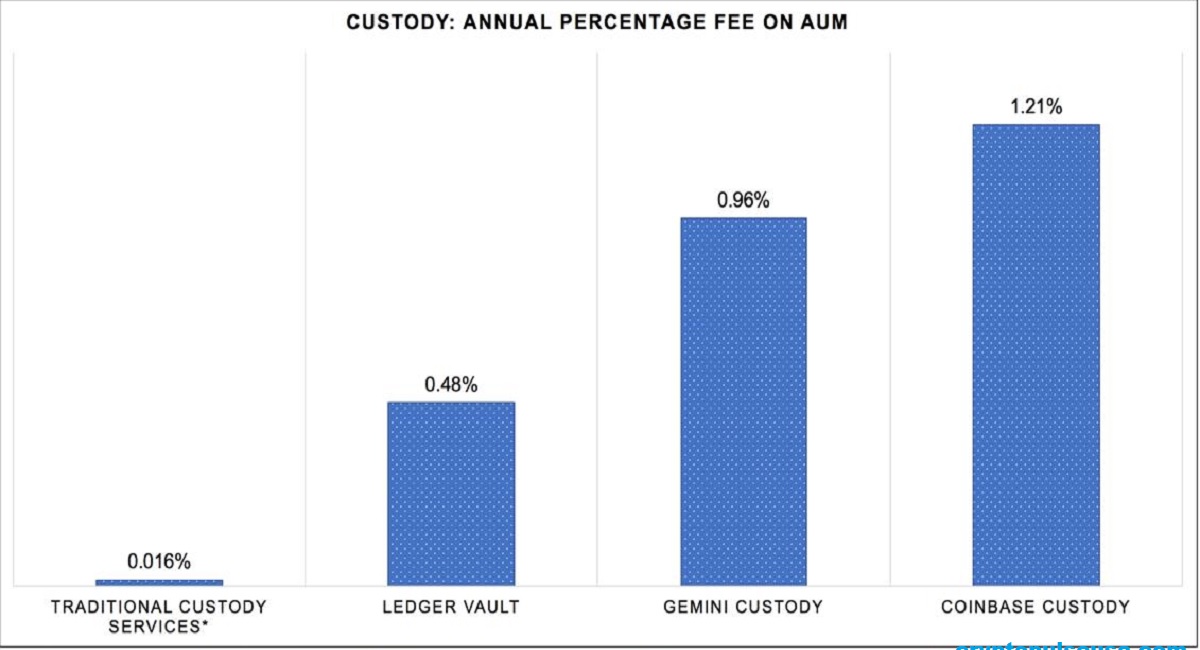
Most of your crypto is stored in cold storage, meaning it is kept offline in highly secure environments that are protected from hacking attempts. Only a small portion is kept in online “hot wallets” to enable quick trading and transfers.
This approach is part of the fidelity crypto security features , and it’s one of the main reasons the platform is considered relatively safe compared to many exchanges.
What Makes Fidelity Crypto Different?
The biggest difference between fidelity crypto and traditional crypto platforms is its focus on simplicity and integration.
Instead of offering hundreds of coins, advanced trading tools, or DeFi access, Fidelity keeps things minimal. You can buy a few major cryptocurrencies and hold them as part of your long-term portfolio. This makes it ideal for investors who want exposure to crypto without diving deep into technical details.
Another unique feature is that you can view your crypto alongside stocks, ETFs, and retirement accounts, creating a unified investment dashboard.
Additionally, Fidelity has expanded into areas like crypto retirement investing, allowing users to include digital assets in IRAs for long-term growth potential.
Important Things to Understand
While fidelity crypto is simple and secure, it’s important to understand its limitations.
You do not have full control over your crypto, as Fidelity manages the private keys. This means you cannot always transfer your assets freely like you would with a personal wallet. The platform is also limited in terms of features there is no staking, no leverage trading, and fewer supported coins compared to major exchanges.
However, these limitations are intentional. Fidelity is not trying to be a full-featured crypto exchange. Instead, it positions itself as a safe and regulated entry point into crypto investing.
Fidelity Crypto vs Coinbase
When analyzing fidelity crypto vs coinbase fees comparison, it becomes clear that both platforms serve different audiences. Coinbase offers a wide range of cryptocurrencies and advanced trading tools, making it suitable for active traders.
Fidelity, on the other hand, focuses on simplicity and long-term investing. Its spread-based fee model is less transparent but easier for beginners to understand. Choosing between the two depends on whether you prioritize ease of use or advanced functionality.
When comparing fidelity crypto vs coinbase fees comparison, the differences become clear:
| Feature | Fidelity Crypto | Coinbase |
|---|---|---|
| Fees | Spread (~1%) | Transparent fees + spread |
| Coins | Limited | Hundreds available |
| Control | Custodial | Partial control |
| Features | Basic | Advanced trading, staking |
Fidelity Crypto Supported Coins List
One of the first limitations you’ll notice is the fidelity crypto supported coins list 2026. Unlike many crypto exchanges that offer hundreds of coins, Fidelity keeps its selection intentionally limited. Typically, you’ll find Bitcoin and Ethereum, along with a few other large-cap assets depending on availability.
This limited offering may seem restrictive, but it reflects a focus on stability and lower risk. For conservative investors, this approach can be beneficial. However, if you are interested in exploring new or emerging altcoins, this platform may not meet your needs.
Fidelity Crypto Fees Explained
Understanding fidelity crypto fees is crucial before you invest. Unlike traditional exchanges that charge clear commissions, Fidelity uses a spread-based pricing model.
For example, if Bitcoin is trading at $30,000, you might actually buy it at $30,300. That difference represents about a 1% cost. If you invest $1,000, you immediately lose around $10 due to this spread. When you sell, a similar cost may apply again.
This is why fidelity crypto hidden fees is so important. These costs are not always obvious, but they can significantly affect your overall returns over time.
Is Fidelity Crypto Safe for Beginners?
Security is one of the biggest reasons people choose fidelity crypto. If you’re wondering is fidelity crypto safe for beginners, the answer is generally yes, thanks to its strong infrastructure.
Fidelity uses institutional-grade security measures, including cold storage and strict compliance standards. These fidelity crypto security features provide peace of mind for users who may be worried about hacks or fraud.
However, there is a trade-off. You do not control your private keys, meaning your crypto is held by the platform. While this reduces the risk of user error, it also limits your control compared to decentralized wallets.
Fidelity Crypto Pros and Cons
A balanced fidelity crypto pros and cons review 2026 reveals that the platform is designed with simplicity in mind.
On the positive side, it offers a trusted brand, an easy-to-use interface, and a beginner-friendly experience. These features make it ideal for users who are new to crypto or prefer a traditional investment approach.
On the downside, it lacks advanced features. There is no staking, no DeFi access, and only a limited selection of coins. This makes it less suitable for experienced investors looking for more flexibility.
Fidelity Crypto Withdrawal Rules and Limitations
Another important factor to consider is fidelity crypto withdrawal rules and limits. Many users ask, can you transfer crypto to fidelity account, expecting full flexibility.
In reality, Fidelity operates under a custodial model, which means transfers are limited. You may not be able to move your crypto freely in and out of the platform. This can be a drawback for users who want full control or plan to use their assets in decentralized applications.
Fidelity Crypto for Long-Term Investors & IRA Strategy
Where fidelity crypto truly stands out is in long-term investing. If you are considering fidelity crypto for long term investing, the platform is well-suited for holding assets like Bitcoin and Ethereum over time.
Additionally, fidelity crypto for retirement accounts ira allows investors to integrate crypto into a broader retirement strategy. This makes it appealing for those who view cryptocurrency as part of a diversified, long-term portfolio rather than a short-term trading opportunity.
Who Should NOT Use Fidelity Crypto
This platform is not ideal for day traders, altcoin enthusiasts, or users interested in DeFi and staking.
If you prefer active trading or want access to a wide variety of cryptocurrencies, you may find Fidelity too restrictive. It is best suited for investors who value simplicity and long-term growth over flexibility.
Is Fidelity Crypto Available Outside the US?
A common question among global users is fidelity crypto not available outside US what to do. Currently, the platform is primarily available in the United States, with limited access elsewhere.
This means international users will need to explore alternative platforms. While this is a limitation, it also highlights an important gap that many articles fail to address.
Final Verdict: Is Fidelity Crypto Worth It in 2026?
In conclusion, fidelity crypto is a strong option for beginners and long-term investors who prioritize security and simplicity. Its connection to Fidelity Investments adds a level of trust that many newer platforms cannot match.
However, it is not the best choice for everyone. Limited features, restricted withdrawals, and hidden spread costs may be deal-breakers for more advanced users. Ultimately, whether it is worth it depends on your investment goals and experience level.
FAQ
What fees does Fidelity Crypto charge?
Fees are included in the spread, typically around 1%, rather than direct commissions.
Can you withdraw crypto from Fidelity?
Fidelity crypto withdrawal rules limit transfers compared to traditional crypto wallets.
What coins are available on Fidelity Crypto?
The fidelity crypto supported coins list mainly includes Bitcoin and Ethereum.
Is Fidelity Crypto better than Coinbase?
Fidelity crypto vs coinbase depends on your needs—Fidelity is better for simplicity, while Coinbase offers more features.





Leave a Reply