
The BAI ETF is the iShares A.I. Innovation and Tech Active ETF, an actively managed exchange-traded fund focused on companies involved in artificial intelligence and advanced technology. Instead of simply tracking a fixed AI index, BAI uses active management to select companies across different parts of the AI technology ecosystem.
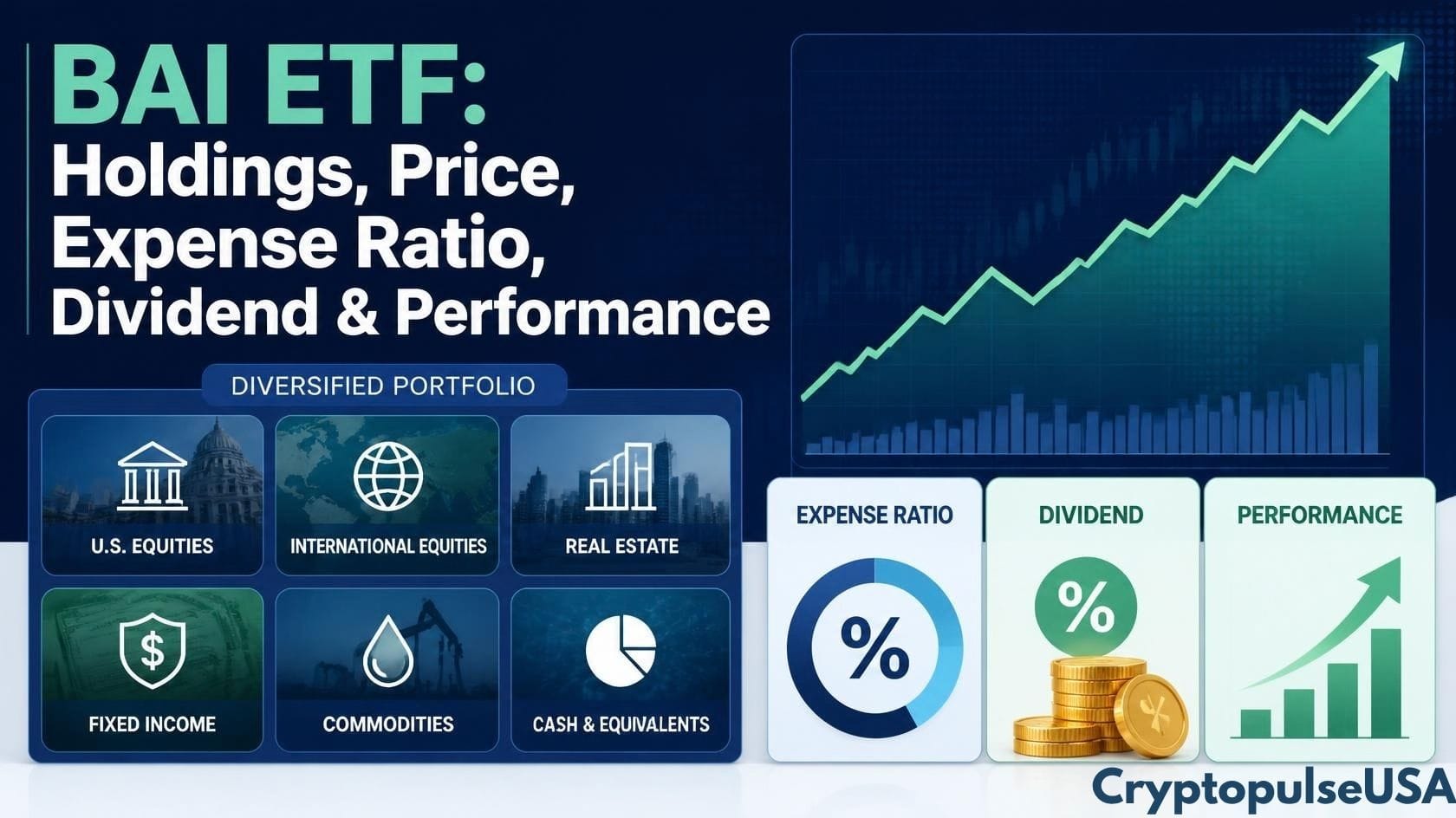
As of September 21, 2026, BAI had a closing market price of $46.93, a NAV of $46.92, 49 holdings, and about $15.0 billion in net assets. Its gross expense ratio is 0.65%, while its current net expense ratio is 0.55%. This BAI ETF guide covers its current price, holdings, portfolio strategy, dividend history, expense ratio, performance, risks, AI exposure, and how it differs from other AI ETFs.
Data note: ETF prices, holdings, portfolio weights, yields, and performance can change. The market data in this article is dated where applicable and should be checked against the latest official fund information before making an investment decision.
Also read: ARTY ETF: Price, Holdings, Performance & More
BAI ETF at a Glance
| BAI ETF Metric | Latest Information |
|---|---|
| Fund name | iShares A.I. Innovation and Tech Active ETF |
| Ticker | BAI |
| Issuer | iShares / BlackRock |
| Asset class | Equity |
| Management style | Actively managed |
| Exchange | NYSE Arca |
| Inception date | October 21, 2024 |
| Closing price | $46.93 |
| NAV | $46.92 |
| 52-week range | $31.20–$54.19 |
| Number of holdings | 49 |
| Net assets | About $15.0 billion |
| Gross expense ratio | 0.65% |
| Net expense ratio | 0.55% |
| Distribution frequency | Semi-annual |
| 12-month trailing yield | 1.34% |
| 30-day SEC yield | -0.30% |
| Daily volume | 2,019,204 shares |
| 30-day average volume | 2,323,175 shares |
The figures above are based primarily on the latest iShares data available as of September 21, 2026, although yield figures are reported by iShares as of August 31, 2026.
What Is BAI ETF?
BAI is the iShares A.I. Innovation and Tech Active ETF. It is designed to provide actively managed exposure to companies that enable, develop, use, or deploy artificial intelligence technology.
The fund looks across the broader AI technology stack rather than focusing only on one area such as semiconductor manufacturers. iShares describes this ecosystem as including infrastructure, intelligence, and applications and services.
That means BAI can potentially hold companies involved in areas such as:
- AI chips and semiconductors
- Computing infrastructure
- Cloud technology
- AI software
- Data and networking
- AI applications
- Technology services
- AI-related power and infrastructure
BAI invests globally and is not limited to large-cap U.S. technology companies. Its portfolio managers use fundamental research to select securities across different market capitalizations.
Is BAI ETF Actively Managed?
Yes. BAI is an actively managed ETF. This is one of the most important things to understand about the fund. An index-tracking ETF generally follows predetermined rules for selecting and weighting investments. An actively managed ETF gives its portfolio managers more flexibility to change the portfolio based on their research and investment views.
For BAI, this means holdings can change as the managers assess developments in AI, technology, company fundamentals, valuations, and market conditions. The fund’s listed portfolio managers include Tony Kim and Reid Menge, both associated with BlackRock’s Fundamental Equities Global Technology Team.
BAI ETF Price and NAV
As of September 21, 2026, BAI had:
- Closing market price: $46.93
- NAV: $46.92
- 52-week high: $54.19
- 52-week low: $31.20
The same date showed a one-day NAV increase of $1.78, or 3.95%.
BAI ETF Market Price vs. NAV
The market price and NAV are related but are not exactly the same thing. Market price is the price at which BAI shares trade on the stock exchange. NAV, or net asset value, represents the value of the fund’s underlying assets minus liabilities, calculated on a per-share basis.
Because ETFs trade throughout the day, the market price can temporarily trade above or below NAV. BAI, iShares reported a closing price of $46.93 compared with a NAV of $46.92 on September 21, 2026. The reported premium/discount was 0.03%. This distinction is useful when researching BAI because an investor is buying shares at the market price, not directly buying the fund’s underlying securities at NAV.
BAI ETF Holdings
One of the most important searches for investors researching BAI is BAI ETF holdings. As of September 21, 2026, the fund had 49 holdings. iShares also notes that holdings are subject to change, which is particularly important because BAI is actively managed.
Rather than treating today’s holdings as permanent, investors should check the latest official holdings file before making decisions.
What Types of Companies Does BAI Hold?
BAI’s portfolio can cover several parts of the AI ecosystem.
These include:
AI infrastructure: Companies providing computing, semiconductor, networking, and other infrastructure needed to build and operate AI systems.
AI intelligence: Companies developing technologies, software, and systems that provide AI capabilities.
AI applications and services: Businesses using AI in products, software, platforms, and services.
AI-related power and infrastructure: Companies that may benefit from the growing infrastructure requirements associated with AI deployment.
iShares says BAI uses a concentrated portfolio of global AI and technology equities selected through bottom-up, research-driven fundamental investing.
BAI ETF Holdings Can Change
This is an important difference between BAI and many passive ETFs. The fund does not simply keep the same holdings permanently. Portfolio managers can adjust positions as their investment views change. For that reason, a list of BAI ETF holdings published today can become outdated. When checking holdings, look at:
- Company name
- Ticker
- Portfolio weight
- Sector
- Country
- Date of the holdings data
This approach gives a more accurate picture of what BAI actually owns at a particular point in time.
BAI ETF Sector Exposure
BAI has a strong technology concentration. As of September 21, 2026, iShares reported the following sector exposure:
| Sector | Portfolio Weight |
|---|---|
| Information Technology | 88.95% |
| Communication | 5.33% |
| Consumer Discretionary | 2.86% |
| Industrials | 1.16% |
| Materials | 0.64% |
| Cash and/or Derivatives | 0.64% |
The allocations are subject to change. This breakdown is important because calling BAI simply an “AI ETF” can hide how concentrated the fund is in technology. An investor looking at BAI should understand that its performance can be heavily influenced by developments in the technology sector.
BAI ETF Geographic Exposure
BAI is a global fund, although the United States currently represents most of its geographic exposure.
As of September 21, 2026, the geographic breakdown reported by iShares was:
| Country/Region | Weight |
|---|---|
| United States | 74.98% |
| Taiwan | 18.62% |
| Israel | 2.09% |
| South Korea | 1.77% |
| Other | 1.48% |
| Cash and/or Derivatives | 0.64% |
iShares notes that geographic exposure is based principally on the domicile of the issuers and that allocations can change. The Taiwan exposure is particularly relevant because semiconductor manufacturing is an important part of the global AI supply chain.
Also Read: ETF Overlap: How to Compare ETF Holdings and Avoid Portfolio Duplication
BAI ETF Expense Ratio and Fees
The BAI ETF expense ratio is 0.65%, according to the current prospectus. The fund’s current net expense ratio is 0.55% after a 0.10 percentage-point fee waiver. iShares lists a 0.65% management fee and a 0.55% net expense ratio.
What Does a 0.55% Expense Ratio Mean?
Suppose you invested $10,000 in BAI. A 0.55% annual expense ratio is approximately equivalent to $55 per year on $10,000, assuming the entire balance stayed unchanged. The actual dollar impact will vary because your investment value changes over time. ETF expenses are generally reflected in the fund’s returns rather than appearing as a separate bill to the investor.
Gross Expense Ratio vs. Net Expense Ratio
These two numbers can be confusing. Gross expense ratio: 0.65% and Net expense ratio: 0.55%
The gross figure reflects the fund’s stated expenses before the applicable fee waiver. The net figure reflects the current waiver. Because fee waivers can have an expiration or other conditions, investors should check the latest prospectus instead of assuming the net expense ratio will remain unchanged forever.
BAI ETF Dividend and Distribution
BAI does make distributions, but it is important not to view it primarily as a high-income ETF. iShares currently lists BAI’s distribution frequency as semi-annual.
Does BAI ETF Pay a Dividend?
Yes. BAI can distribute income generated by its portfolio. However, the amount can vary significantly from one distribution period to another. The official distribution history currently shows:
| Ex-Date | Payable Date | Total Distribution |
|---|---|---|
| June 15, 2026 | June 18, 2026 | $0.000000 |
| December 16, 2025 | December 19, 2025 | $0.593347 |
| June 16, 2025 | June 20, 2025 | $0.004499 |
| December 17, 2024 | December 20, 2024 | $0.000000 |
iShares lists the June 2026 distribution as zero, while the December 2025 distribution was $0.593347.
BAI ETF Dividend Yield
As of August 31, 2026, iShares reported:
- 12-month trailing yield: 1.34%
- 30-day SEC yield: -0.30%
- Unsubsidized 30-day SEC yield: -0.40%
These numbers should not be treated as interchangeable. The trailing yield and SEC yield use different calculations and time periods. For that reason, investors searching for BAI ETF dividend yield should always check the date and methodology behind the number.
Also Read: ETF and Dividends: How ETF Dividends Work, Yields, Payouts & History
BAI ETF Performance
BAI launched on October 21, 2024, so it does not yet have the long performance history available for older ETFs.
As of August 31, 2026, iShares reported:
- YTD total return: 58.18%
- 1-month total return: 5.76%
- 3-month total return: 60.68%
- 6-month total return: 58.18%
- 1-year total return: 85.73%
- Since inception total return: 114.52%
The corresponding market-price returns were slightly different, including an 86.05% one-year market-price return and 114.69% since inception.
BAI ETF Performance Needs Context
Strong historical performance can make an ETF look attractive at first glance, but past performance does not guarantee future results. BAI’s short operating history is also important. A fund launched in 2024 has not experienced every type of market environment. Investors therefore have less long-term performance history to examine than they would with an older ETF.
iShares itself states that investment return and principal value fluctuate and that past performance does not guarantee future results.
BAI ETF 52-Week High and Low
As of September 21, 2026, BAI’s 52-week range was:
| Metric | Value |
|---|---|
| 52-week high | $54.19 |
| 52-week low | $31.20 |
| Closing price | $46.93 |
| NAV | $46.92 |
The closing price was therefore below the reported 52-week high and substantially above the 52-week low. A 52-week range can help provide context, but it should not be interpreted as a prediction of where BAI’s price will go next.
BAI ETF Trading Volume and Liquidity
As of September 21, 2026, BAI had:
- Daily volume: 2,019,204 shares
- 30-day average volume: 2,323,175 shares
- 30-day median bid/ask spread: 0.02%
These figures provide useful information about the fund’s trading activity and transaction conditions.
For investors, liquidity matters because the bid-ask spread is one of the costs that can affect the price paid when buying or selling an ETF. A liquid ETF can still experience wider spreads during unusual market conditions, so investors should look at the spread at the time of the trade rather than assuming it will always remain the same.
How BAI ETF’s Investment Strategy Works
BAI’s strategy is built around the broader AI technology ecosystem rather than one narrow AI application.
AI Infrastructure
AI models require enormous amounts of computing power, memory, networking, and data-center infrastructure. Companies supplying these components can therefore be part of the AI investment ecosystem.
AI Intelligence and Software
Another layer includes businesses developing AI models, software, cloud platforms, data tools, and other technologies that allow AI systems to perform useful tasks.
AI Applications and Services
The final layer includes businesses that use AI in products and services. This can include enterprise software, consumer applications, automation, and other AI-enabled products. The advantage of thinking about AI as a technology stack is that it prevents investors from treating AI as synonymous with only a handful of famous semiconductor or software companies.
iShares says BAI invests across the enablement, development, utilization, and deployment of AI technology and products or services that leverage AI.
Why Active Management Matters for BAI ETF
Active management gives BAI’s portfolio managers flexibility. For example, if a company becomes less attractive because of valuation, competitive pressure, changing fundamentals, or another factor, the portfolio can potentially be adjusted.
The opposite is also true: an active manager can increase exposure to companies that the investment team believes have attractive fundamentals. This flexibility is one of the main differences between BAI and an index-based AI ETF. However, active management does not guarantee better performance. It introduces manager decisions into the investment process, which creates another factor investors need to evaluate.
BAI ETF Risks to Understand
BAI provides targeted exposure to an important technology theme, but targeted exposure also creates risks.
Technology Sector Risk
BAI has a very high allocation to information technology. As a result, changes in technology valuations, interest rates, competition, corporate spending, and investor sentiment can affect the fund.
AI Theme Risk
The fund’s investment strategy is closely tied to artificial intelligence. If AI adoption, spending, expectations, or valuations change, companies associated with the theme can experience significant price movements.
Concentration Risk
BAI has a concentrated portfolio compared with a broad-market ETF. Even though it owns dozens of securities, its performance can still be significantly affected by its largest positions and by the technology industry.
Semiconductor Risk
Semiconductor companies play an important role in AI infrastructure. That creates exposure to semiconductor cycles, manufacturing capacity, supply chains, capital spending, international trade, and demand for computing products.
International Risk
BAI has meaningful exposure outside the United States, including Taiwan, Israel, and South Korea. International investments can introduce currency, political, regulatory, economic, and geopolitical risks.
Active Management Risk
Because BAI is actively managed, the decisions made by the portfolio management team can influence results.
Holdings can change as investment views evolve.
Valuation Risk
AI-related companies can attract high investor expectations. When expectations become very high, even a company that continues growing can experience a falling share price if investors believe future growth will be slower than previously expected.
BAI ETF vs Other AI ETFs
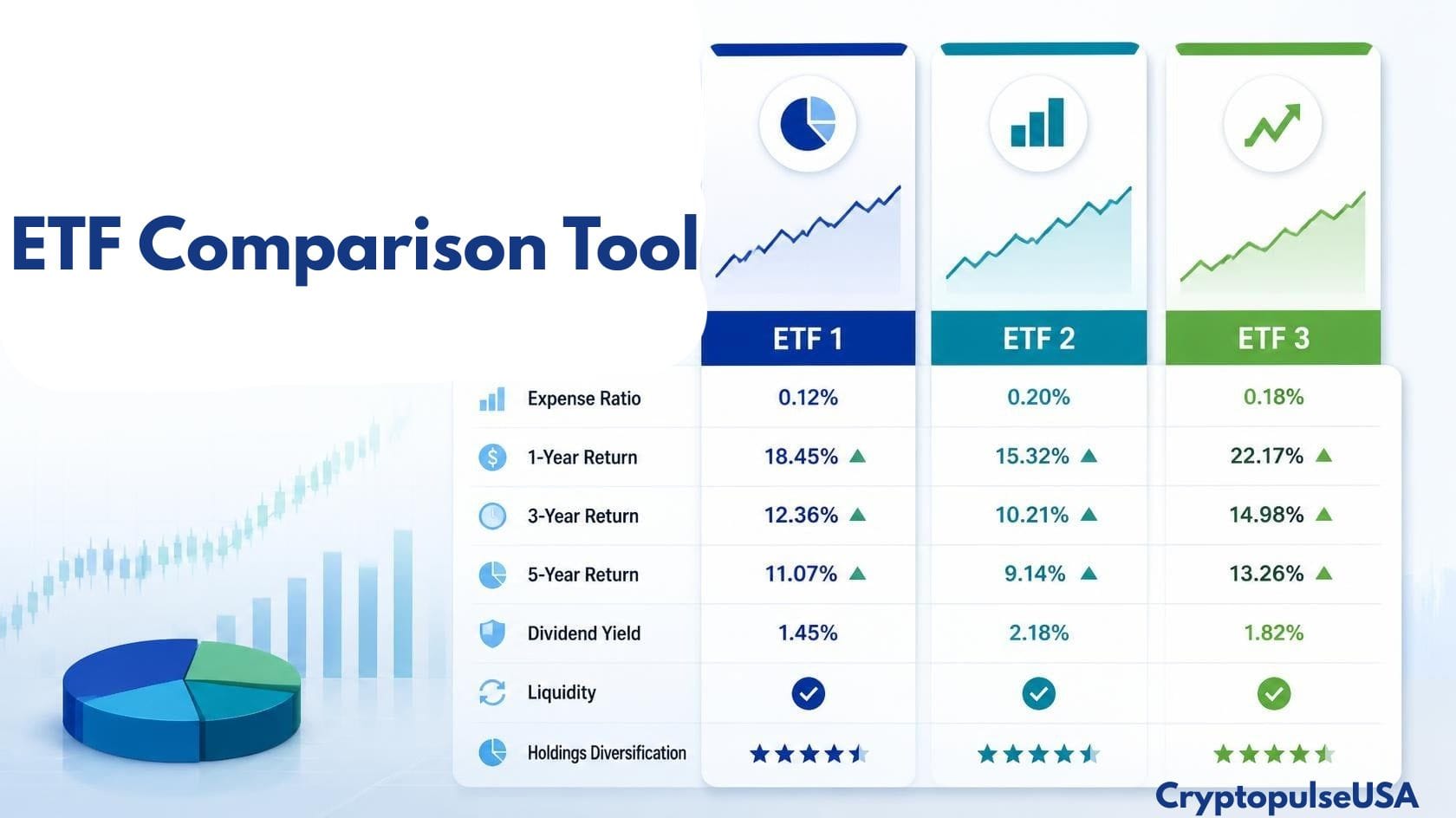
BAI belongs to a growing group of ETFs designed to provide artificial intelligence exposure. The most useful way to compare them is not simply by asking which ETF has the highest recent return.
Instead, compare:
- Active vs. passive management
- Expense ratio
- Number of holdings
- Top-10 concentration
- Geographic exposure
- Semiconductor exposure
- Software exposure
- Dividend/distribution history
- Trading volume
- Performance history
- Investment methodology
BAI ETF vs AIQ
BAI and AIQ both provide exposure to artificial intelligence and technology, but their portfolio construction approaches differ. BAI is actively managed and can adjust its holdings as the investment team’s views change. AIQ is an index-based ETF that follows a rules-based approach. This makes the comparison useful for investors deciding between active and passive AI exposure.
BAI ETF vs BOTZ
BOTZ focuses on robotics and artificial intelligence. BAI has a broader active approach to the AI technology stack, including infrastructure, intelligence, applications, and services. The two funds can therefore provide different types of exposure even though both are commonly discussed as AI-related ETFs.
BAI ETF vs Broad Technology ETFs
A broader technology ETF may hold many companies that benefit from technology growth without specifically targeting AI. BAI is more thematic. That distinction matters because a thematic ETF can provide more targeted exposure while also creating greater concentration around a particular investment theme.
BAI ETF vs Broad Market Diversification
BAI should not automatically be viewed as a replacement for a broad-market ETF. A broad-market fund may hold companies across many industries, while BAI focuses heavily on AI and advanced technology.
For example, an investor researching BAI alongside a broader international ETF such as VT should recognize that the two funds serve very different portfolio roles. BAI provides targeted AI and technology exposure.
A broad-market ETF can provide exposure across a much wider range of companies and sectors. The right comparison therefore depends on what role an investor wants the ETF to play.
Who Might Consider BAI ETF?
BAI may be relevant to investors researching:
- AI-focused ETFs
- Actively managed technology ETFs
- Global AI companies
- AI infrastructure
- Semiconductor exposure
- AI software and applications
- Long-term thematic technology exposure
It can also be researched as a thematic allocation alongside broader investments.
That does not mean BAI automatically fits every portfolio. Its high technology exposure, active-management structure, concentration, and relatively short history are important factors to consider.
Who May Want a Different Type of ETF?
BAI’s strategy may not match every investment objective.
Investors seeking broad diversification
A broad-market ETF may provide exposure to more industries and companies.
Investors primarily seeking income
BAI’s distribution history and current yield may not make it the central choice for an investor whose main objective is dividend income.
Investors wanting passive exposure
Investors who prefer rules-based index tracking may want to compare BAI with passive AI ETFs.
Investors avoiding technology concentration
BAI’s large information-technology allocation may not fit someone trying to reduce technology exposure. These differences are useful because choosing an ETF is not simply about finding a fund with an attractive recent return. The fund’s structure should match the role it is expected to play in a portfolio.
How to Research BAI ETF Before Investing
Before researching BAI as a potential investment, consider this checklist:
1. Check the latest holdings
BAI is actively managed, so holdings can change.
2. Review the expense ratio
Compare both the gross and net expense ratios and check whether the fee waiver is still available.
3. Examine concentration
Look beyond the number of holdings and examine how much of the portfolio is represented by the largest positions.
4. Check geographic exposure
BAI is global, with the majority currently in U.S. companies but meaningful exposure to Taiwan and other markets.
5. Understand the dividend data
Look at actual distributions as well as trailing and SEC yields.
6. Review performance periods
Consider YTD, one-year, and since-inception performance while remembering that BAI has a relatively short history.
7. Compare the investment strategy
Determine whether active AI exposure is what you are actually looking for.
8. Check liquidity
Look at trading volume and the bid-ask spread before placing an order.
9. Read the latest fund documents
The official prospectus and fact sheet provide important information about the fund’s strategy, expenses, risks, and performance.
FAQs about BAI ETF
What is BAI ETF?
BAI is the iShares A.I. Innovation and Tech Active ETF. It is an actively managed equity ETF that invests in global companies involved in enabling, developing, deploying, or using artificial intelligence technology.
What does BAI ETF invest in?
BAI invests across the AI technology ecosystem, including areas such as semiconductor and hardware companies, cloud infrastructure, AI applications, software, services, and other AI-related technologies.
Is BAI ETF actively managed?
Yes. BAI is actively managed rather than being a traditional index-tracking AI ETF. Its portfolio managers can change holdings and allocations as their investment views evolve.
What is the BAI ETF expense ratio?
BAI has a gross expense ratio of 0.65% and a current net expense ratio of 0.55% after a 0.10% fee waiver.
Does BAI ETF pay dividends?
Yes. BAI makes distributions, although the amount can vary. iShares currently lists the fund’s distribution frequency as semi-annual.
What is the BAI ETF dividend yield?
As of August 31, 2026, BAI had a 12-month trailing yield of 1.34% and a 30-day SEC yield of -0.30%. These measures use different methodologies and should not be treated as identical.
What is the current BAI ETF price?
The BAI ETF closing market price was $46.93 on September 21, 2026, while its NAV was $46.92. ETF prices change throughout the trading day.
What is the BAI ETF 52-week high and low?
As of September 21, 2026, the reported 52-week range was $31.20 to $54.19.
Is BAI ETF a good AI ETF?
There is no single answer that applies to every investor. BAI’s active-management approach, AI focus, fees, concentration, performance history, and risks should be compared with the investor’s own objectives and with other AI and technology ETFs.
Final Thoughts on BAI ETF
The BAI ETF offers a targeted way to research exposure to artificial intelligence and advanced technology through an actively managed portfolio. Its key characteristics are different from a conventional broad-market ETF. BAI focuses heavily on technology, invests globally, and allows its portfolio managers to change holdings as their investment views evolve. As of September 21, 2026, it had 49 holdings, a $46.93 closing price, a $46.92 NAV, and approximately $15 billion in net assets. Its gross expense ratio was 0.65%, with a 0.55% current net expense ratio.
The fund has also produced substantial returns since inception, but its history is still relatively short because it launched in October 2024. Past performance should therefore be viewed as historical information rather than a forecast. For anyone researching BAI, the most important areas to monitor are holdings, portfolio concentration, AI exposure, fees, distributions, performance, liquidity, and risk. Checking the latest iShares data is particularly important because an actively managed ETF can change its portfolio over time.
Disclaimer: This article is for educational and informational purposes only. It is not financial, investment, tax, or legal advice. ETF investments involve risk, including the possible loss of principal. Always review the latest fund documents and consider your own circumstances before making an investment decision.
Also visit: ETF Guides & Analysis


Leave a Reply